Zalgiris Kaunas

Virtus Bologne
| Foundation | 1944 | |
| Arena | Žalgirio Arena | |
| Championships | Lietuvos Krepšinio Lyga / EuroLeague | |
| Coach | Tomas Masiulis | |
| Famous players who have played for the club | Arvydas Sabonis / Šarūnas Jasikevičius / Tyus Edney |
Player to watch : Jonas Valančiūnas
1085 matchs NBA, 116 sélections nationales… Souvent oublié dans la conversation des meilleurs joueurs européens de ces dernières années en NBA, Jonas Valančiūnas est l’un des rares joueurs du Vieux Continent à posséder dans son compteur plus de 10 campagnes outre-Atlantique. Des Toronto Raptors aux Denver Nuggets en passant par les Memphis Grizzlies, on ne compte plus les double-doubles ainsi que les saisons à plus de 15 points de moyenne. Révélé au Vilniaus Perlas Energija il y a quasi 20 ans de cela, le géant lituanien boucle la boucle au Žalgiris Kaunas.
Bien que loin de son prime, Jonas Valančiūnas est encore apparu lors des dernières playoffs aux côtés de Nikola Jokic. Initialement catégorisé dans le rang des « pivots à l’ancienne », sa précision sous le cercle complète parfaitement ses 2.11m de puissance. Une qualité à finir près du cercle qui n’a cessé de s’élargir jusqu’à la ligne des 3 points. La fanbase lituanienne est prête à vibrer derrière sa légende !
Playing style
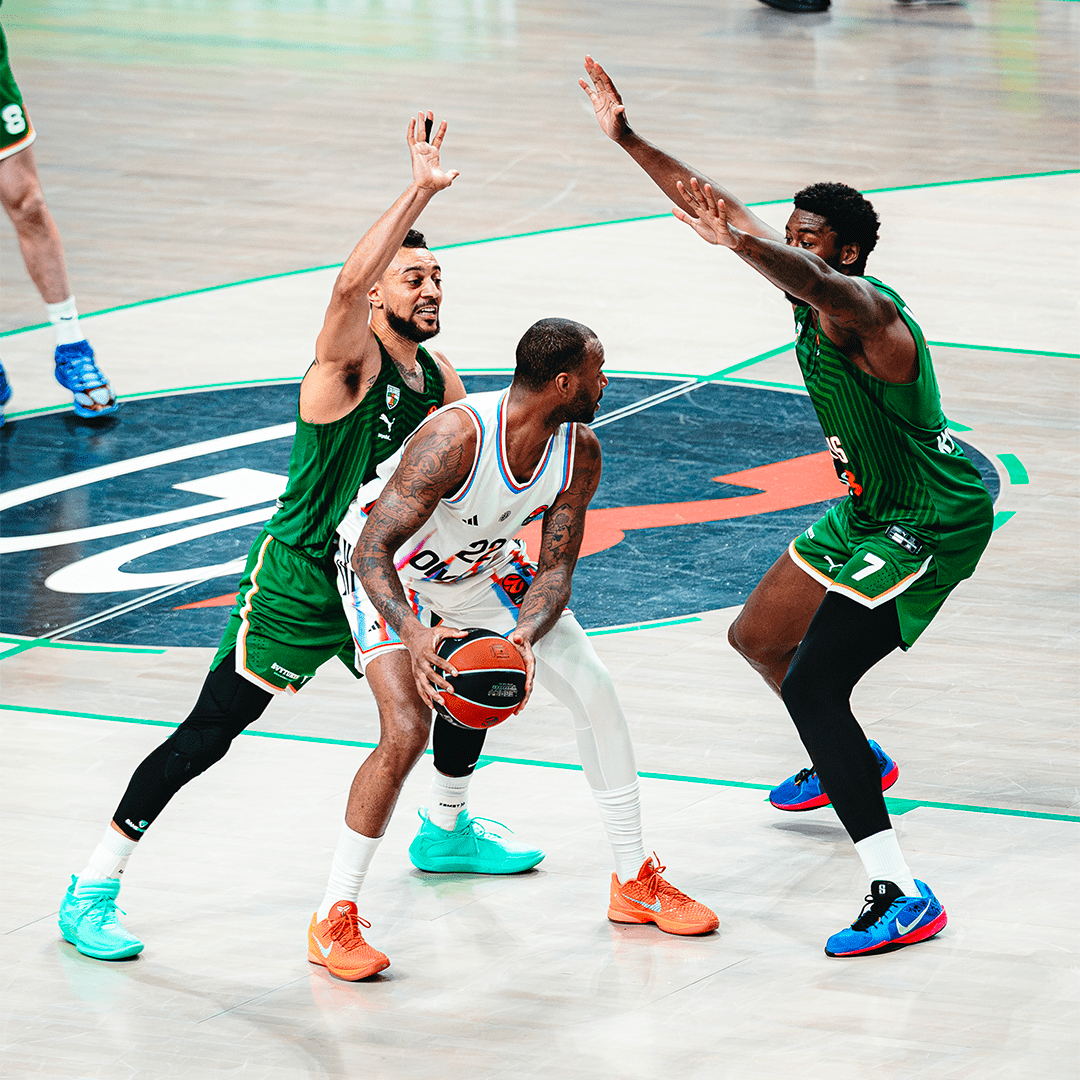
Žalgiris Kaunas is, by nature, a well-balanced team. Much like his squad, Tomas Masiulis plays a thoughtful and controlled game. This philosophy is all the more evident when the ball is in play, where set plays reign supreme. It is no coincidence that the Lithuanians have boasted one of the very best three-point shooting percentages in Europe for the past two years.
Boasting experienced guards in the form of Edwards, Lô and Williams-Goss, this team loses very few possessions. Never in a rush, rarely taking first-time shots. Instead, they play an old-school game with a plethora of pick-and-rolls and pick-and-pops. Their forwards are also very good at finding space thanks to this horizontal movement, which forces the opposition to stretch their defence.
This constant activity is also evident in defence. Efficiency is key, with a particular focus on the opposition’s offensive playmakers. Indeed, in the era of ultra-spacing, Žalgiris does not hesitate to step out very quickly onto the perimeter, even if it means leaving space behind them. Rebounding is also an aspect regularly highlighted by Tomas Masiulis.
Club history
The Kaunas team was founded in 1944 amidst the bombing. The first match in the Lithuanian club’s history was, in fact, against a German team. Over the first two decades, the club changed its name several times, from ASK to SKIF, before finally adopting the name Žalgiris in 1950. However, the standard of play remained consistent. The Žaliai balti established themselves as a stronghold of the Soviet bloc. Between the two USSR championships they secured and the seven Lithuanian titles won in eight years, the club dominated.
The appointment of Vytautas Bimba in 1962 marked the start of a slump. Apart from the odd title here and there in the Soviet league, the Lithuanians achieved no real success until the end of his tenure 13 years later. It was not until the arrival of Vladas Garastas as head coach that Kaunas regained its form. By 1981 – just two seasons after his arrival – the team made its mark on the continental stage, thanks in particular to a 2.21m-tall young giant named Arvydas Sabonis. Then aged 17, the centre quickly became the linchpin of this green-and-white machine. Both domestically, with a three-peat in the Soviet League, and at European level. First, the club reached the Cup Winners’ Cup (C2) final for the first time in 1985, before falling short the following year in the European Cup (C1) final.
The collapse of the USSR in 1991 marked a new beginning for Žalgiris. In addition to the 1990 National Cup, Kaunas won Lithuania’s first six-time league titles. The turn of the millennium marked the club’s heyday. Whilst Arvydas Sabonis decided to terrorise the NBA courts, the team turned to youth, with Jonas Kazlauskas at the helm. In 1994, the Lithuanians set out to conquer Europe. The journey began with a semi-final in the 1996 European Champions League (C1). This was followed by a convincing victory (82-67) in the 1998 Saporta Cup (C2) against Milan. Then, during the 1998–1999 season, the Lithuanians reached the EuroLeague Final Four (C1) for the very first time. Better still, they won the premier FIBA competition thanks to an MVP-calibre Tyrus Edney, having defeated Olympiacos (87–71) and Bologna (82–74).
A spectacular end to the millennium followed by a more up-and-down start to the decade. After six years at the top, Kaunas relinquished its throne in Lithuania, though it failed to make its mark on the continental stage. This slump lasted just one year, as the Žaliai balti went on to win the LKL quadruple. And for Sabonis’s final season in 2004, Žalgiris came within a whisker of the EuroLeague Final Four (C1). The blame lay with a cruel three-pointer from Derrick Sharp in the closing minutes against Maccabi Tel Aviv – the eventual winners of the competition. Four more seasons of ups and downs followed. The club won its first Baltic Basketball League title whilst also securing the league and cup double on two occasions. The real decline began when Vladimir Romanov took the reins of the club in 2009. The Lithuanians continued to lift trophies and opened a new arena, but suffered from chronic instability, as evidenced by the fact that they went through nine coaches in just three years !
With the change in management in 2013, stability returned to the west of Vilnius. Whilst their standing on the domestic scene remained largely unchanged, Kaunas began to make a name for itself in Europe once again. This was particularly evident following the arrival of the legendary Šarūnas Jasikevičius in January 2016. The adventure began with an encouraging 10th-place finish in the EuroLeague (C1) in 2017. Then a certain Vasilije Micić arrived during the off-season. Expected to finish bottom of the table due to a budget far smaller than their rivals’, they caused a sensation and managed to clinch the bronze medal right under the noses of the mighty CSKA Moscow. Žalgiris had been waiting for such a performance since 2001! Subsequently, COVID-19 brought the 2020–2021 season to a halt and, in the wake of this, the club lost the league title. Kazys Maksvytis then undertook a radical overhaul. Today, Jonas Valančiūnas’s squad appears to be embarking on a new cycle.
awards and honors
| EuroLeague (C1) | 1999 | |
| Saporta Cup (C2) | 1998 | |
| Lithuanian Champion | 1994 / 1995 / 1996 / 1997 / 1998 / 1999 / 2001 / 2003 / 2004 / 2005 / 2007 / 2008 / 2011 / 2012 / 2013 / 2014 / 2015 / 2016 / 2017 / 2018 / 2019 / 2020 / 2021 / 2023 / 2025 / 2026 | |
| Baltic Basketball League | 2005 / 2008 / 2010 / 2011 / 2012 | |
| Lithuanian Cup | 1990 / 2007 / 2008 / 2011 / 2012 / 2015 / 2017 / 2018 / 2020 / 2021 / 2022 |
Zoom : the fans
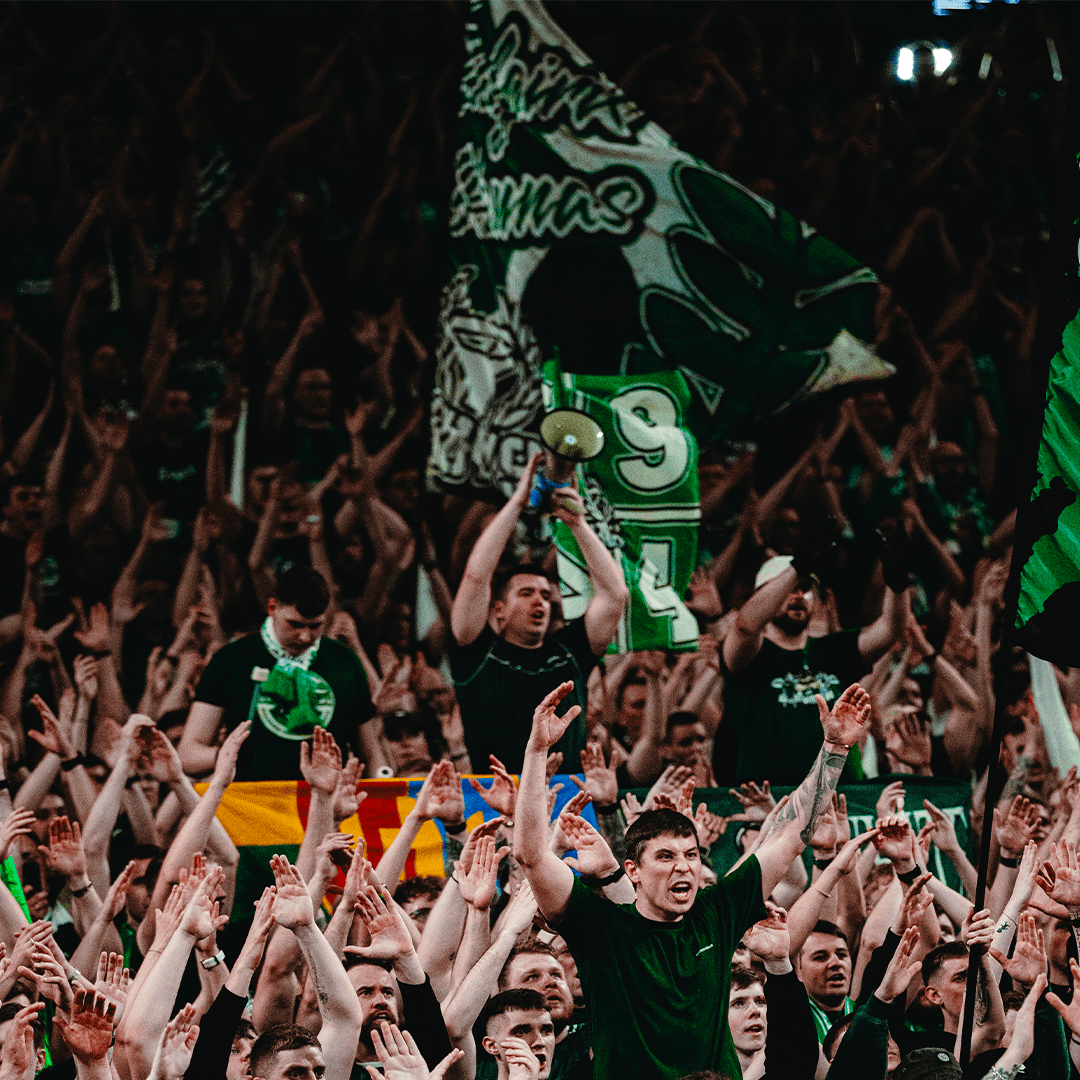
Although Kaunas has a population of just over 300,000, Žalgiris boasts a particularly strong fan base. Over the last three seasons, the club has ranked either first or second in the EuroLeague (C1) for attendance figures. For example, last season 100% of regular-season matches were sold out, according to their annual report. And we’re not talking about a small venue here. No, the Zalgirio Arena is the seventh-largest basketball arena in Europe, with over 15,500 seats.
Žalgiris has a fan base unlike any other. Because as well as turning out in droves, the supporters create an electric atmosphere from the first minute to the last. Watching a Kaunas match is an experience in a class of its own.
The Number : 77 + 2
77 is the total number of points scored by Žalgiris (41) and Nancy (36) in the first quarter of their match on 9 January 2009. And 2 is the number of points scored by Kaunas in the first quarter against Anadolu Efes on 4 December 2014. These are two records at opposite ends of the spectrum, both held by the Lithuanian club.
Other Teams