Maccabi Playtika Tel Aviv
Maccabi Tel Aviv
| Foundation | 1932 | |
| Arena | Menora Mivtachim Arena | |
| Championships | Winner League / EuroLeague | |
| Coach | Oded Kattash | |
| Famous players who have played for the club | Anthony Parker / Šarūnas Jasikevičius / Deni Avdija |
Player to watch : Jaylen Hoard
The Hoards are a family of basketball enthusiasts. Dad Antwon played in the French top flight, mum Katia was runner-up in the 1993 European Championships with the French national team, daughter Anaïa has played for the French youth teams, and son Jaylen… is excelling at Maccabi Tel Aviv! The most American of our Frenchies has now been playing east of the Israeli capital for two seasons. An important point to note, as it was in the north of the city – from 2022 to 2024 – that the former player burst onto the European scene while playing for Hapoel.
Having come through the Pôle France, the U17 world champion quickly made the move across the Atlantic. There, he discovered high schools, the NCAA, the G-League, but above all the NBA, where he spent three seasons, scoring a total of 257 points in 39 games. The 26-year-old power forward is currently playing his second EuroLeague (C1) campaign. Although his long-range shooting is still a work in progress, Jaylen Hoard puts in a tremendous amount of work at both ends of the court. An elite playmaker, he could play a key role in Victor Wembanyama’s French national team in the future.
Playing style
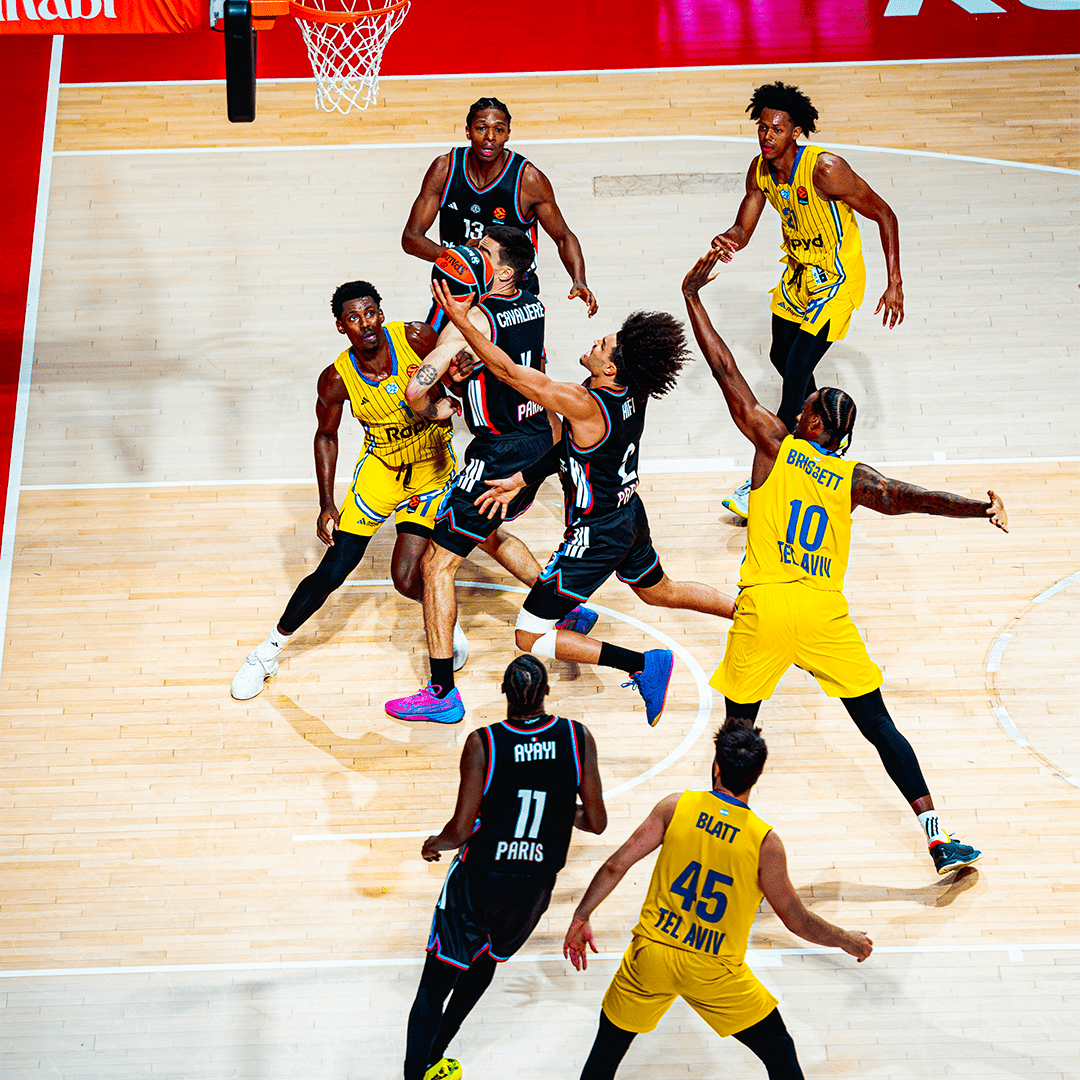
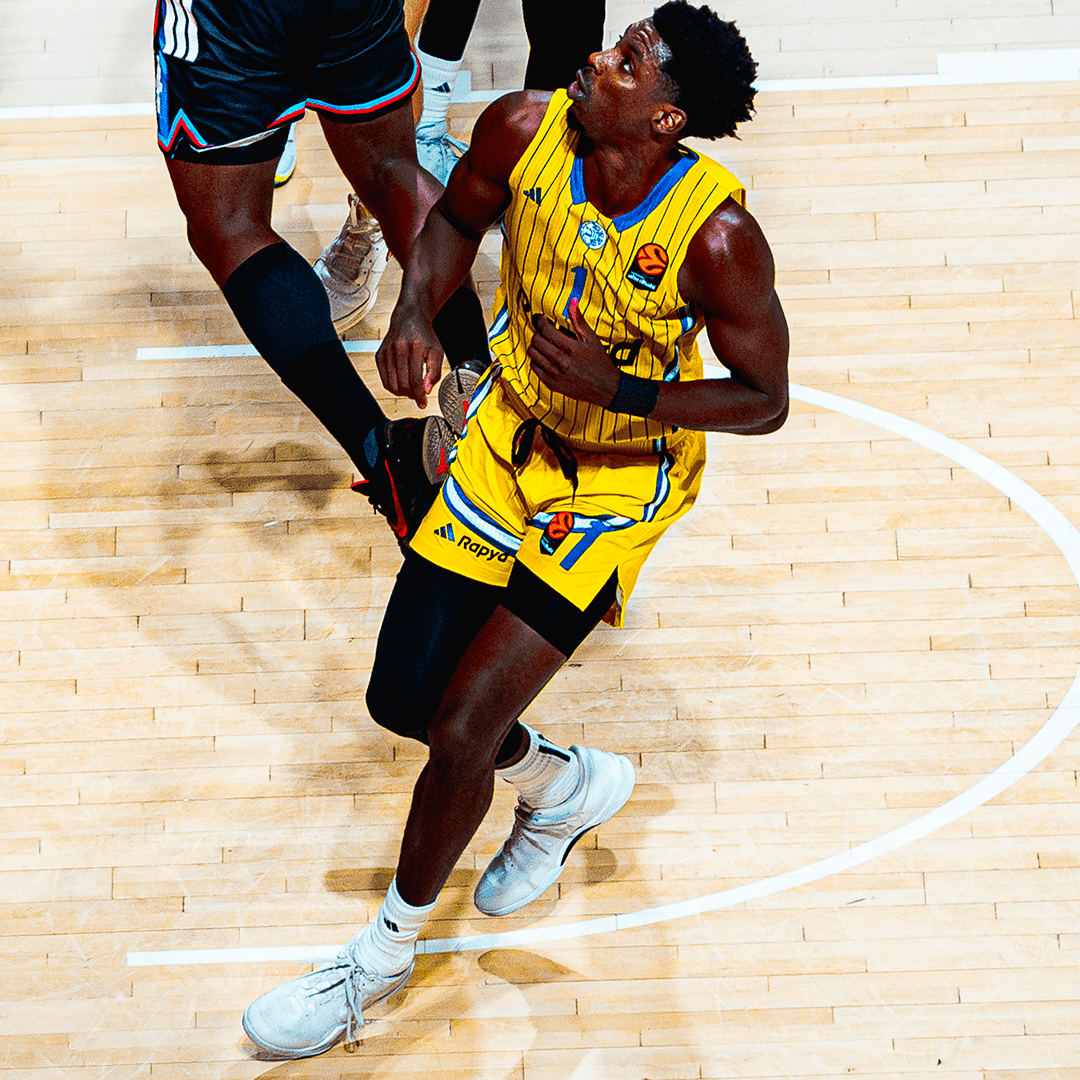
Under Oded Kattash, Maccabi Tel Aviv plays a largely attacking style of basketball. It is both structured and spontaneous, characterised by a strong emphasis on the three-point shot. Their game revolves largely around this aspect. There is excellent ball movement to drive down the strong side before switching to the shooters. As a result, the game is regularly punctuated by extra passes and catch-and-shoot plays. Fast breaks and transitions are also a constant feature.
This 2025–2026 Maccabi side also favours mobile big men capable of rolling to the basket or popping out to play the short roll, such as Jaylen Hoard or even Roman Sorkin. This approach comes at a defensive cost. This mobility comes at the expense of physical presence, which makes Tel Aviv very vulnerable in the paint. The team therefore alternates between pressuring the ball-handler, aggressive help defence and targeted switches depending on the matchup to hold their own.
Club history
The year 1932 marked the beginning of basketball at Maccabi Tel Aviv. Originally featuring blue and white colours, the club added yellow to its crest in the 1940s as a gesture of solidarity with European Jews. Hence, incidentally, the presence of the Star of David on the logo. No sooner had the national championship been established than the Tel Aviv side established themselves as THE best team in the country, leaving their rivals in the dust from 1954 to 1959. At least, until the capital’s other team came onto the scene. A head-to-head rivalry with Hapoel began to take shape. This did not, however, prevent Tal Brody’s teammates from achieving a three-peat in the national cup and reaching the final of the 1967 Cup Winners’ Cup (C2).
But the 1960s did not end on a high note for the club. Financial problems were indeed undermining the institution. It was then that a young 30-year-old lawyer named Shimon Mizrahi became interim president. It was hard to imagine that he would still hold that position in 2026. This period of turbulence did not, however, prevent the Israelis from winning the 1970 league title. The first in a run of 23 consecutive triumphs, not to mention the host of domestic cups they bagged! Beyond the domestic scene, Maccabi seemed to be closing in on the European Holy Grail. A quest that took shape in 1977. Tel Aviv notably overcame Real Madrid and then BC Brno. However, a major obstacle stood in their way to the final: CSKA Moscow! The match carried such political and sporting significance (the Cold War being what it was) that it was played on neutral ground. And to everyone’s surprise, the Tel Aviv ‘David’ defeated the Moscow ‘Goliath’, before lifting the trophy by a single point against Mobilgirgi Varese (78-77).
This marked the beginning of Maccabi’s love affair with the European Cup (C1). Led by players such as Motti Aroesti and Doron Jamchi, the Yellows secured another victory in 1981, narrowly beating Bologna 80–79. Despite being the most consistent team on the continent, this victory would be their only one of the decade. The blame lay with five narrow defeats in finals. Defeats by four points against Real Madrid and Olimpia Milan, as well as defeats by two possessions against Squibb Cantù, Jugoplastika Split… and Milan! The 1990s proved far less successful on the Old Continent, despite the presence of fine players such as Doron Jamchy. Even on home soil, Tel Aviv were defeated by Hapoel Galil Elyon during the 1993 championship – the only team to achieve this feat in nearly 37 years!
For these dark clouds are giving way to a golden age. The team of the early 2000s was Maccabi Tel Aviv! With a squad constantly replenished with talent, the Yellows continued their dominant run in Israel, winning nine Winner League titles in ten years. And in Europe, they won three of the five EuroLeague (C1) titles between 2001 and 2005. The adventure began against Panathinaikos (81-67) in somewhat unusual circumstances (a dispute with FIBA). Then, Pini Gershon returned to Maccabi, where he built his team around Anthony Parker – the only two-time MVP in EuroLeague (C1) history – as well as Šarūnas Jasikevičius, also an MVP. The result: back-to-back titles! In 2004, they inflicted the heaviest ever final victory in Bologna (118-74), then crushed Tau Vitoria the following year (90-78).
Maccabi certainly loves to start the decade on a high note. Four years after their last EuroLeague (C1) final, David Blatt’s men—with the coach making a comeback—caused a sensation against Tau Vitoria and Real Madrid, but fell just short of the trophy against Panathinaikos (78–70). They would get their revenge in 2014. After overtime, Tel Aviv clinched its sixth title against Real Madrid (98-86). More than 10 years later, this great institution has not made it past the quarter-finals. A decline mirrored on the domestic front, where their dominance is repeatedly challenged.
awards and honors
| EuroLeague (C1) | 1977 / 1981 / 2001 / 2004 / 2005 / 2014 | |
| Saporta Cup (C2) | 1967 | |
| Israeli Champion | 1954 / 1955 / 1957 / 1958 / 1959 / 1962 / 1963 / 1964 / 1967 / 1968 / 1970 / 1971 / 1972 / 1973 / 1974 / 1975 / 1976 / 1977 / 1978 / 1979 / 1980 / 1981 / 1982 / 1983 / 1984 / 1985 / 1986 / 1987 / 1988 / 1989 / 1990 / 1991 / 1992 / 1994 / 1995 / 1996 / 1997 / 1998 / 1999 / 2000 / 2001 / 2002 / 2003 / 2004 / 2005 / 2006 / 2007 / 2009 / 2011 / 2012 / 2014 / 2018 / 2019 / 2020 / 2021 / 2023 / 2024 / 2026 | |
| Israeli Cup | 1956 / 1958 / 1959 / 1961 / 1963 / 1964 / 1966 / 1970 / 1971 / 1972 / 1973 / 1975 / 1977 / 1978 / 1979 / 1980 / 1981 / 1982 / 1983 / 1985 / 1986 / 1987 / 1989 / 1990 / 1991 / 1994 / 1998 / 1999 / 2000 / 2001 / 2002 / 2003 / 2004 / 2005 / 2006 / 2010 / 2011 / 2012 / 2013 / 2014 / 2015 / 2016 / 2017 / 2021 / 2025 / 2026 | |
| League Cup | 2007 / 2010 / 2011 / 2012 / 2013 / 2015 / 2017 / 2020 / 2021 / 2022 / 2024 |
Zoom : NBA
Historically, Maccabi Tel Aviv is THE European club to have played the most matches against NBA teams, with nearly 20 games. Brace yourselves, the list of ‘firsts’ is particularly long :
– First European team to play against an NBA franchise
– First to beat an NBA franchise
– First to beat an NBA franchise on North American soil
– First foreign team to sell out Madison Square Garden for an exhibition match
The Israeli club has already beaten the Washington Bullets, the New Jersey Nets, the Phoenix Suns and, more recently, the Toronto Raptors in Canada in 2005.
The Number : 57
That’s the number of years Shimon Mizrahi spent at the helm of Maccabi Tel Aviv – it’s hard to say whether that’s a record, but it’s certainly an astonishing statistic.
Other Teams