Olympiacos Piraeus
Olympiacos Le Pirée
| Foundation | 1931 | |
| Arena | Stade de la Paix et de l’Amitié | |
| Championships | ESAKE / EuroLeague | |
| Coach | Georgios Bartzokas | |
| Famous players who have played for the club | Vassilis Spanoulis / Patrick Beverley / Miloš Teodosić |
Player to watch : Jean Montero
The clear favourite in the race for the 2026 Rising Star award, Jean Montero won the honour hands down during his rookie season in the EuroLeague. Having arrived straight from across the Atlantic, Olympiacos’s new star has been causing havoc in attack ever since he first stepped onto the courts in Spain. A 1.88-metre point guard and scorer, the Dominican possesses such a wide range of skills with the ball that it seems impossible to stop him once he gets going. Drives to the basket, mid-range shots, three-pointers, pinpoint passes… The three-time Liga Rookie of the Year can single-handedly transform a team’s attacking play.
His excellence was honed at CBA Gran Canaria and then at Betis Seville, where he was averaging 18 points per game despite having only just come of age! His transition to the pinnacle of European basketball also required no adjustment. A member of the 2025 All-Eurocup First Team and then the 2026 All-EuroLeague First Team, Jean Montero is sweeping all before him. It’s worth noting that he’s just as solid defensively, as demonstrated by his strength in making steals. Now, all that remains is to see if he can prove himself in the EuroLeague (C1).
Playing style
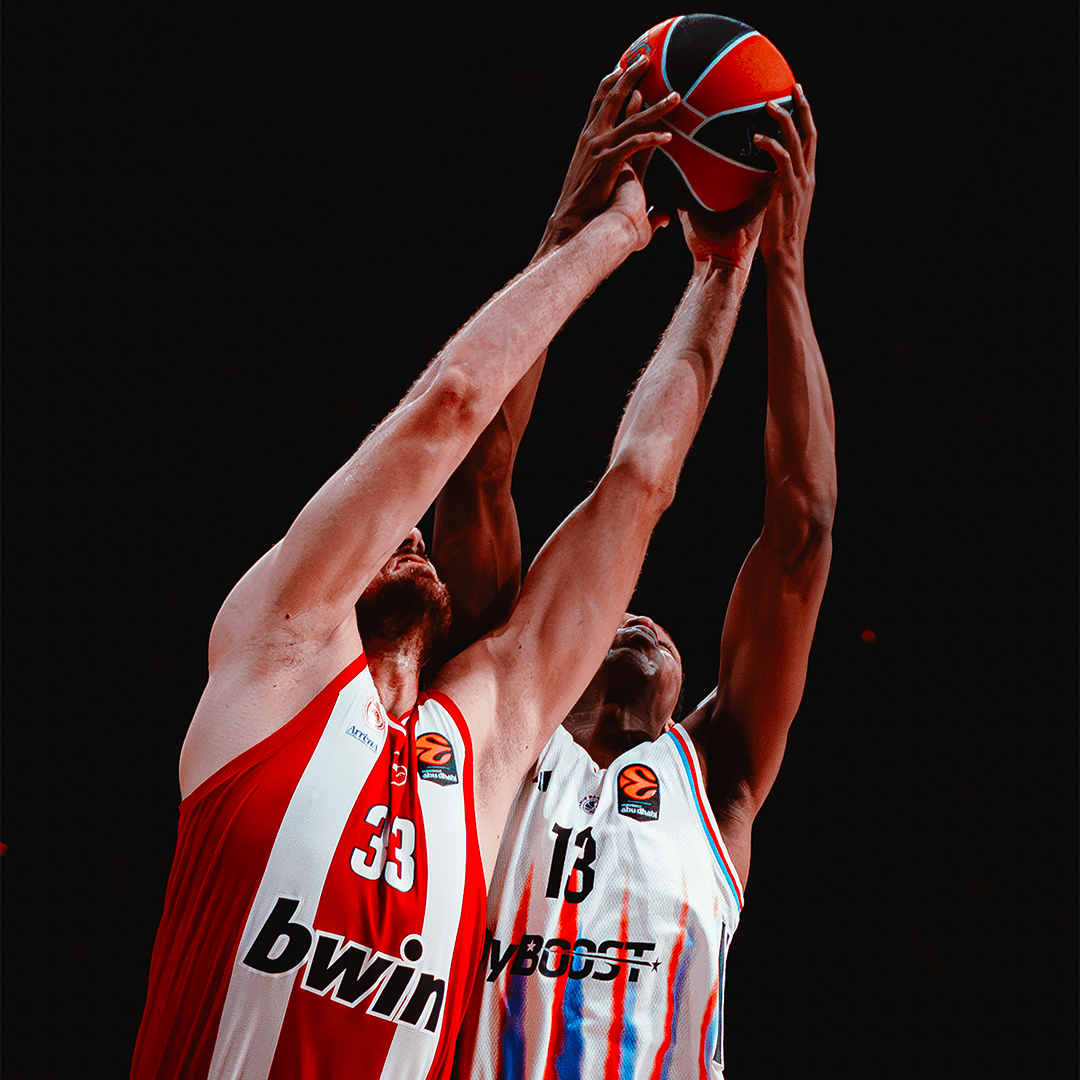
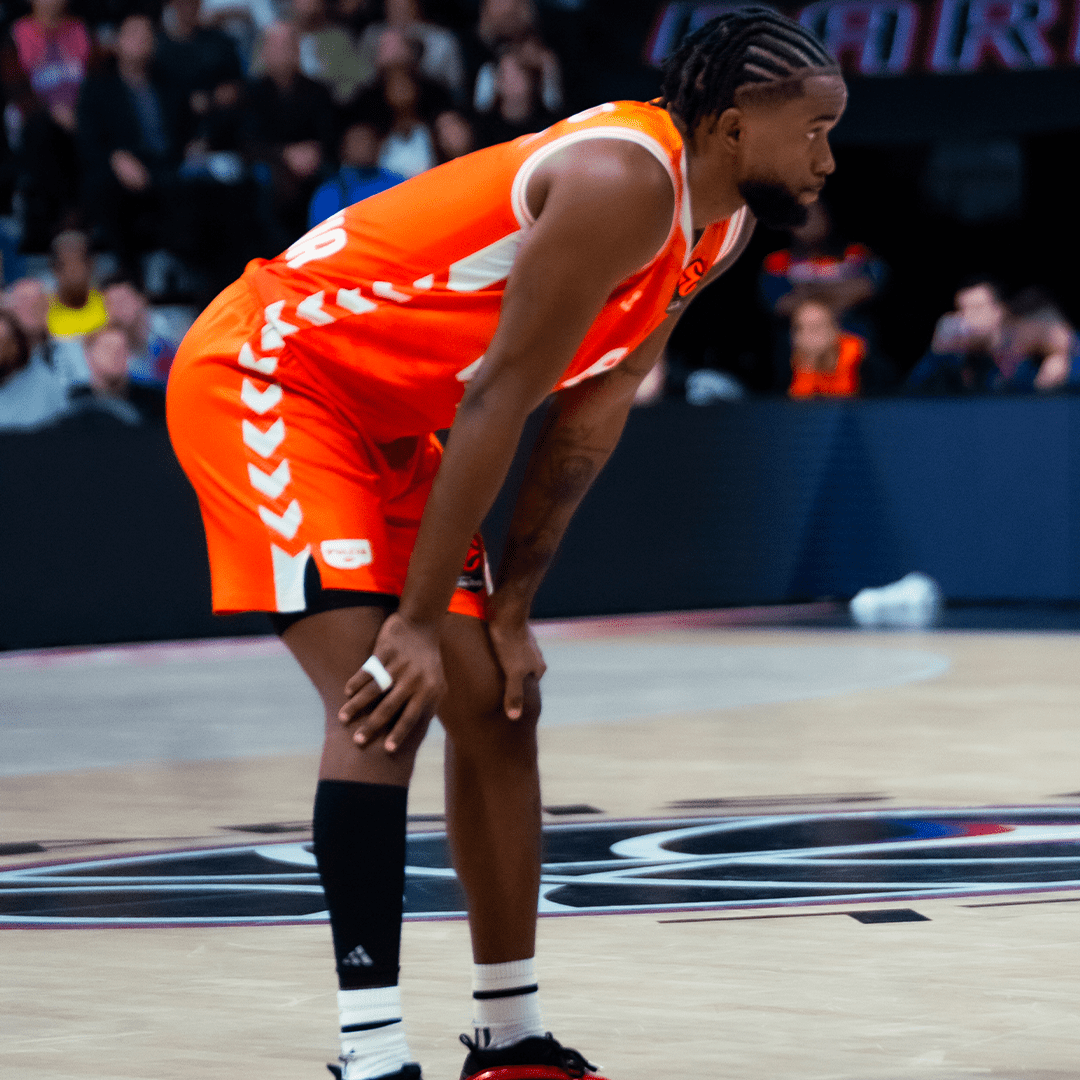
Consistency at the highest level, the ability to maximise his teams’ potential, a winning mentality… Georgios Bartzokas is the epitome of a team-oriented, methodical coach who knows how to move with the times. This 2025–2026 Olympiacos side is a perfect embodiment of that approach. At a time when tempo management is paramount, the Athenians constantly seek to impose their more measured rhythm.
Characterised by a particularly structured style, Olympiacos relies on the physical presence of its big men, perfectly complemented by the spacing provided by its guards. This makes the team unpredictable, capable of punishing opponents with a powerful dunk from Milenkovic before Dorsey sinks a long-range shot from the top of the key.
Despite this strong team spirit, Olympiacos remains dependent on its Vezenkhov-Fournier duo. And this can work for the best, as in the 2025 quarter-finals against Real Madrid… or for the worst, as in the last Final Four!
Club history
The Olympiacos basketball section has its roots in a partnership between a physical education teacher and his pupils. Founded in 1931, the club from the Greek capital took part in its first national championship in 1938. Eleven years later, it won the title, securing the first championship of its history in the process. They did it again in 1960, when, in addition to winning the ESAKE, the Erythrólefki made their European Cup debut.
Just as Olympiacos was on the rise, the club was suddenly brought to a halt by relegation. Amidst a period of instability, a certain Fedon Mattheou took charge of the reds in 1967. With the support of his president, Nikos Goulandris, the tactician moulded a golden generation. Among them were Giatzoglou, Kastrinakis and Melini. The Athenians quickly returned to the ESAKE and played leading roles both nationally and on the continent. Under Mattheou, the Erythrólefki excelled on the continent whilst winning the Cup-League double in 1976. The results continued to flow after his departure, with a three-peat in the domestic Cup and a Top 6 finish in the 1979 Cup Winners’ Cup (C2).
But this superb run came to an abrupt halt: during the 1980s, Olympiacos won just a single trophy! And just as two decades earlier, this drought gave way to a run of success. Despite strong results, 1991 saw the arrival of world-class foreign players such as Eddie Johnson, David Rivers, Roy Tarpley and Walter Berry. Managed by Giánnis Ioannídis and then Dusan Ivković, the club won five consecutive league titles and three National Cups in eight years. In the EuroLeague (C1), however, the Erythrólefki struggled. Final in 1994: lost (59-57) – Final in 1995: lost (73-61) – Final in 1997… won after an impressive run against Barcelona (67-66) !
The Athenians kicked off the new millennium with a third-place finish in the EuroLeague (C1). But initially, the 2000s did not go well for Olympiacos. Following a frustrating 2003, the club went through eight trophy-less seasons. This was largely due to budget cuts. Step by step, the Erythrólefki regained their former glory. First under Jonas Kazlauskas, when they reached the EuroLeague (C1) quarter-finals and contested five consecutive league finals. Then coach Panayótis Yannákis put an end to this run of bad luck by winning the 2010 National Cup.
The decisive factor in the Greeks’ triumphant return came that same year when Dusan Ivković took the reins of the team. The club changed its philosophy, relying mainly on young players such as Kostas Sloukas and Kostas Papanikolaou. This Olympiacos 2.0 defied all the odds! In the wake of Vassilis Spanoulis, the club achieved the league and EuroLeague (C1) double in 2012 – a first in 15 years. And despite the departure of Dusan Ivkovic, Giorgos Bartzokas’s side secured back-to-back European titles, followed by back-to-back ESAKE titles (2015–2016).
Whilst Olympiacos continues to perform well in Europe, on the domestic front the Athenians are going through an unprecedented period of turmoil. In protest against refereeing decisions, the Red and Whites decided to withdraw in the middle of the 2019 National Cup semi-final. Their protest even reached the highest levels of the game. However, the national federation refused to accept the Erythrólefki’s demands, prompting the club to boycott the league for two seasons. Since then, Giorgos Bartzokas has made his comeback in the capital. A return crowned with three ESAKE titles, three National Cups, three Super Cups and even one EuroLeague (C1) title in 2026, following multiple top-three finishes.
awards and honors
| EuroLeague (C1) | 1997 / 2012 / 2013 / 2026 | |
| Greek Champion | 1949 / 1960 / 1976 / 1978 / 1993 / 1994 / 1995 / 1996 / 1997 / 2012 / 2015 / 2016 / 2022 / 2023 / 2025 / 2026 | |
| Greek Cup | 1976 / 1977 / 1978 / 1980 / 1994 / 1997 / 2002 / 2010 / 2011 / 2022 / 2023 / 2024 | |
| Greek Supercup | 2022 / 2023 / 2024 / 2025 |
Zoom : Peace and Friendship Stadium
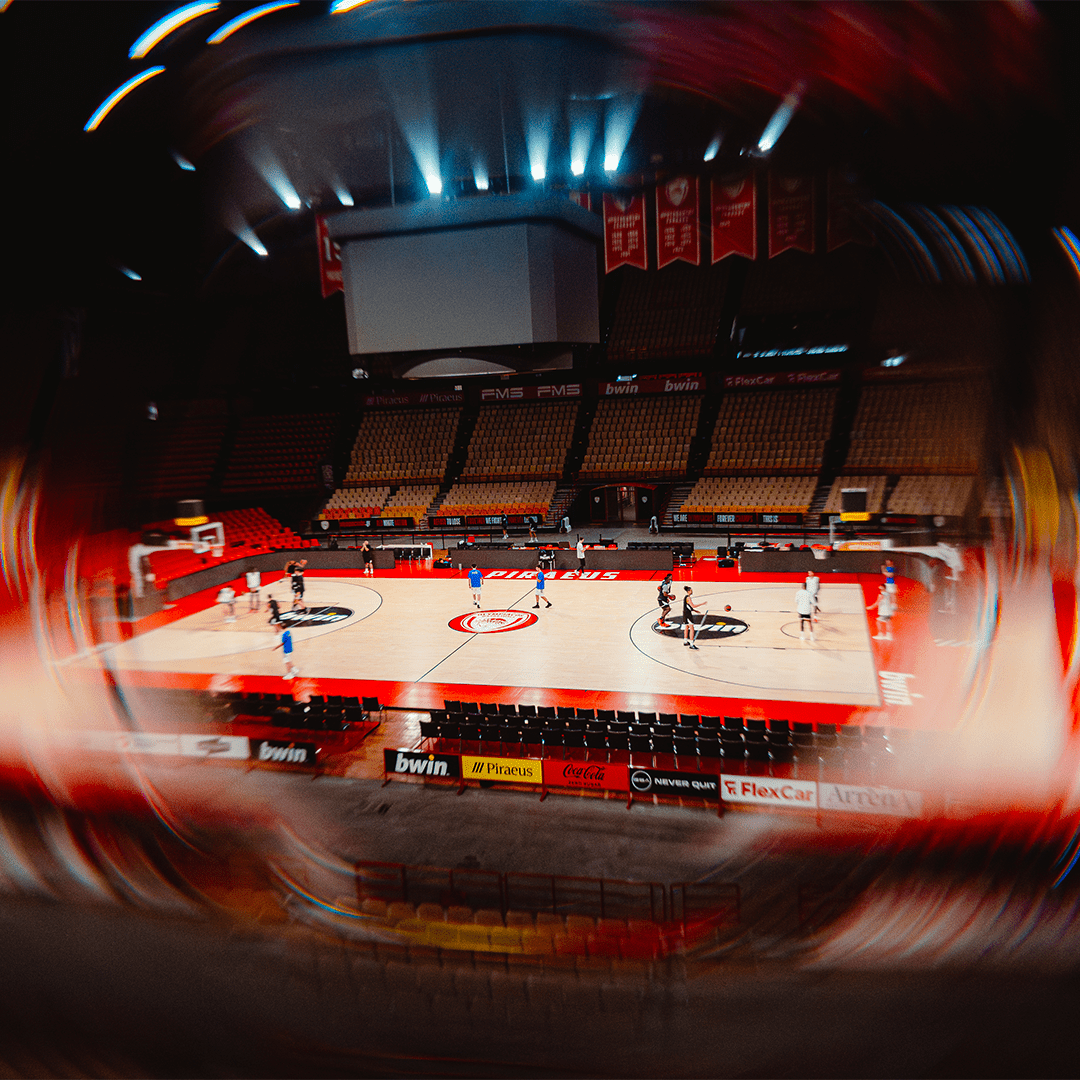
For over 30 years, Olympiacos has played at the ‘Peace and Friendship Stadium’ in Athens. This rather lengthy name actually carries political connotations. Opened in 1985 during the Cold War, Greece sought to convey a diplomatic and cultural message through this venue. All the more so as the country was the subject of rivalry between the two ideological blocs.
The name “Peace and Friendship” reflects this desire for international dialogue, particularly through sport. Paradoxically, today the extremely hostile atmosphere created by Olympiacos supporters contrasts sharply with the stadium’s name.
The Number : 23,1
That was the average age of the Olympiacos squad when they won the title in 2012 – they were the youngest team to have lifted the EuroLeague trophy in the modern era.
Other Teams