Real Madrid
Real Madrid Baloncesto
| Foundation | 1931 | |
| Arena | Movistar Arena | |
| Championships | Liga ACB / EuroLeague | |
| Coach | Pedro Martínez | |
| Famous players who have played for the club | Luka Dončić / Arvydas Sabonis / Sergio Llull |
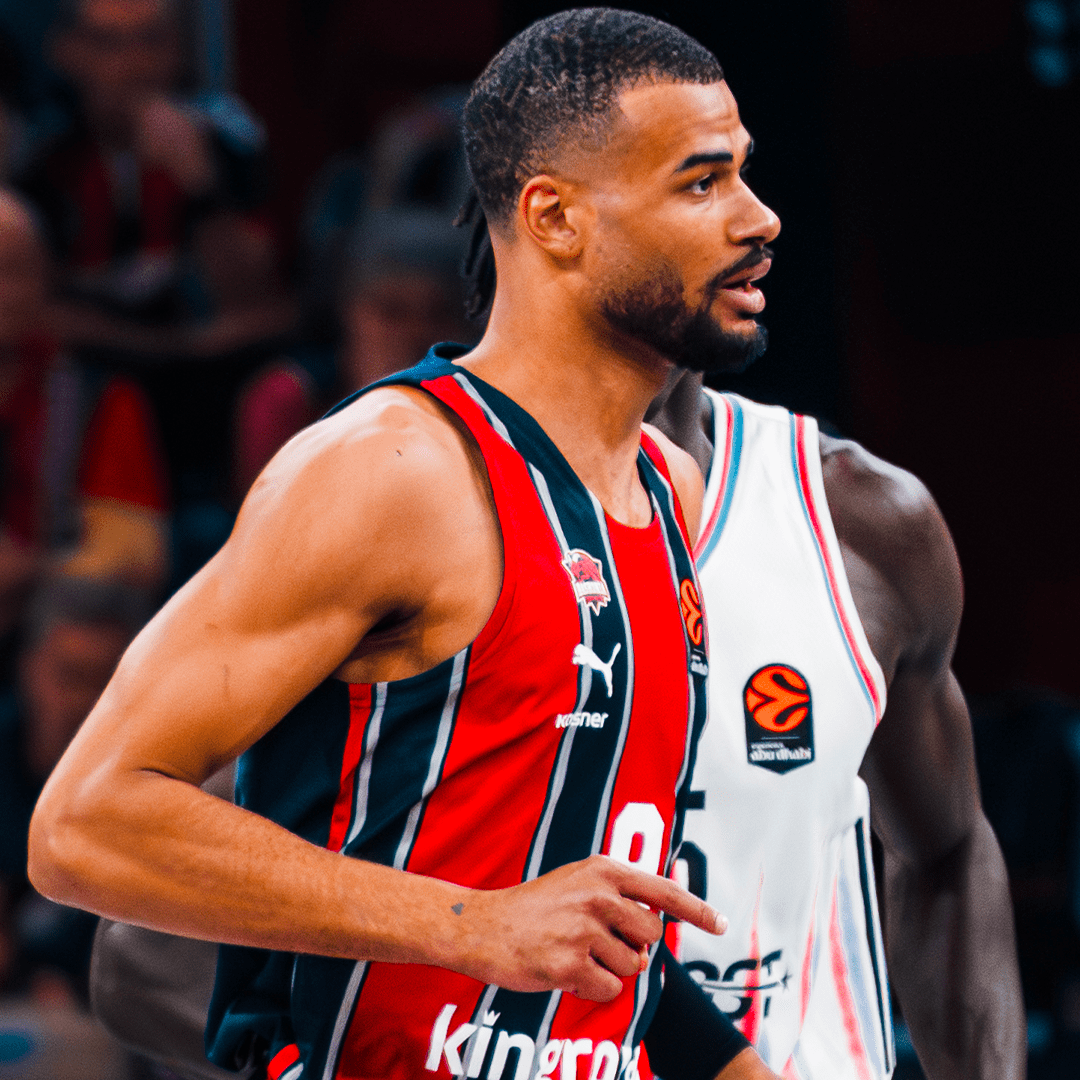
Player to watch : Timothé Luwawu-Cabarrot
In Antibes, our ‘serial shooter’ of the day made his mark in the Espoir ÉLITE, Pro 1 and even Pro B leagues. Whilst everyone expected him to cross the Atlantic to try his luck in the NBA, as so many had done before him, Timothé Luwawu-Cabarrot decided to leave France for… Serbia! A bizarre choice, a strange one at first glance, but one that ultimately paid off. In both the Adriatic League and the Serbian league, the 3&D player was tearing it up in Jokic’s homeland, averaging over 13 points per game. A year of patience was rewarded with the 24th pick in the 2016 draft.
The American dream lasted 340 matches spread over five seasons with the 76ers, Thunder, Bulls and Nets. Even whilst playing alongside the likes of Kevin Durant and James Harden, Timothé Luwawu-Cabarrot consistently clocked up over a quarter of an hour’s playing time. Having returned to Europe via Italy, the silver medallist at the 2021 Olympics and EuroBasket made a brief stint at ASVEL before crossing the Pyrenees to join Baskonia. Here he is at the peak of his powers, as evidenced by his title as top scorer in the 2026 Spanish league. At Real Madrid, TLC is set to take his game to the next level, just as Théo Maledon did last season. The question remains: just how far can he go ?
Playing style
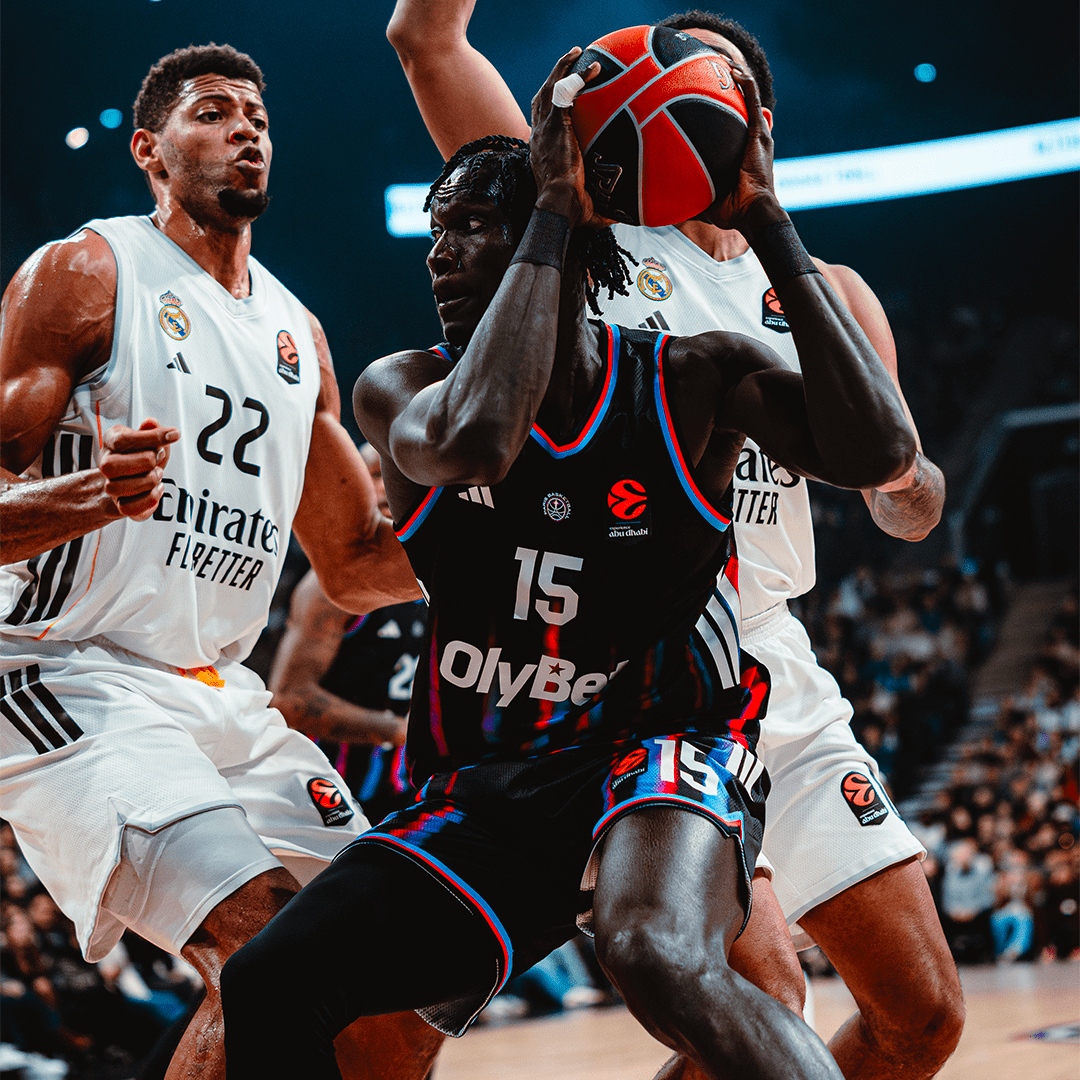
Valencia, Baskonia, Gran Canaria, Bàsquet Manresa… All these clubs where Pedro Martínez has managed share this modern ethos. In each of these teams, the Spanish coach employs an approach based first and foremost on teamwork. Even though Real Madrid’s squad is more experienced and talented than the teams mentioned above, the use of space remains the cornerstone of this system.
Admittedly, there are fewer transitions and less off-the-ball movement, but the ball circulates more effectively. At the end of the chain are shooters, slashers or the Tavares play. The presence of the Cape Verdean centre, moreover, ensures almost automatic protection of the rim. In defence, Real Madrid thus press aggressively on the back lines without the pressure of being completely exposed in a 2-on-2 situation in the paint.
Club history
In response to the growing popularity of Real Madrid Fútbol, Ángel Cabrera founded a basketball section within the club in 1931. This pioneer of Spanish basketball quickly established the Casa Blanca as a leading force on the national stage. And once the Civil War was over (1936–1939), the Madrid side racked up titles in the 1950s: multiple Castile champions, five-time winners of the Copa del Rey (including two back-to-back titles), one Copa Latina, one La Liga title, and two consecutive European Cup semi-finals.
Boasting legends such as Sevillano and Brabender, Real Madrid continued their dominance in Spain from 1960 to 1970. With nine out of ten league titles in the decade and two trebles in the Copa del Rey, no other club in Western Europe could match their achievements. In the East, however, the USSR continued to dominate the continent. The Blancos then took advantage of the Soviet teams’ non-participation in 1964 – as they were focused on the Tokyo Olympics – to lift their first European Cup (C1). Better still, they achieved back-to-back titles following a victory over CSKA Moscow (81-88/62-76). A feat repeated in 1967 against Milan (91-83) and then in 1968 against Spartak Brno (98-95).
Few teams have dominated as much in the seventies. We’re talking about 10 consecutive La Liga titles and 5 consecutive Copa del Rey trophies, accompanied by a historic run of 88 consecutive home wins. Beyond Spain, Pedro Ferrandiz’s side excelled in Europe with three finals in three years, including a two-point victory against the giants of the era, namely Ignis Varese (84–82). It was against this very opponent that Real Madrid Baloncesto became the most successful team in the European Champions Cup (C1) following their latest victory in 1979. A status the club still holds today.
Having won two more league titles, Real Madrid faced increased competition in Spain following the creation of the Liga ACB. Although the Madrid side won the first three editions, their success waned over time. Meanwhile, in the Copa del Rey, Real Madrid won four titles between 1985 and 1993, picking up the first Spanish Super Cup along the way. On the continental stage, the Spaniards shone more brightly in the European Cup Winners’ Cup (C2) with three triumphs.
Real Madrid, however, entered the end of the millennium on a downward trajectory. The year 1992 marked the start of a new project built around the Lithuanian giant Arvydas Sabonis. Having won two of the last three EuroLeague (C1) campaigns, Željko Obradović joined the Blancos shortly afterwards. And 15 years later, the Madrid side lifted the crown jewel of FIBA competitions in 1995. It was the last title before another lean spell. From 2000 to 2014, the Casa Blanca won four La Liga titles, two Copa del Rey trophies, two Spanish Super Cups, and one ULEB Cup (C2). Upon his re-election as club president, Florentino Pérez did not hesitate to invest heavily in the basketball division. Rudy Fernández, Sergio Rodríguez, Jaycee Carroll and Serge Ibaka all signed for the capital club. And after narrowly losing two finals, the Casa Blanca secured their ninth EuroLeague title at home following a 78-59 victory over Olympiacos.
Led by their new star Luka Dončić, Real Madrid Baloncesto swept the Copa del Rey, the Supercopa and the Liga over the next two seasons, before securing their tenth European title. Still dominant in Spain, the Blancos continued to rack up titles on home soil. And in the EuroLeague (C1), their last triumph dates back to 2023. Trailing with three seconds remaining, the evergreen Sergio Lull sank a clutch shot over Youssoupha Fall to secure victory for his side (79-78). The world’s greatest club is far from done collecting trophies.
awards and honors
| EuroLeague (C1) | 1964 / 1965 / 1967 / 1968 / 1974 / 1978 / 1980 / 1995 / 2015 / 2018 / 2023 | |
| European Cup Winners’ Cup (C2) | 1984 / 1989 / 1992 / 1997 | |
| ULEB Cup (C2) | 2007 | |
| Korać Cup (C3) | 1988 | |
| Spanish Champion | 1957 / 1958 / 1960 / 1961 / 1962 / 1963 / 1964 / 1965 / 1966 / 1968 / 1969 / 1970 / 1971 / 1972 / 1973 / 1974 / 1975 / 1976 / 1977 / 1979 / 1980 / 1982 / 1984 / 1985 / 1986 / 1993 / 1994 / 2000 / 2005 / 2007 / 2013 / 2015 / 2016 / 2018 / 2019 / 2022 / 2024 / 2025 | |
| Spanish Cup | 1951 / 1952 / 1954 / 1956 / 1957 / 1960 / 1961 / 1962 / 1965 / 1966 / 1967 / 1970 / 1971 / 1972 / 1973 / 1974 / 1975 / 1977 / 1985 / 1986 / 1989 / 1993 / 2012 / 2014 / 2015 / 2016 / 2017 / 2020 / 2024 | |
| Spanish Supercup | 1985 / 2013 / 2014 / 2015 / 2019 / 2020 / 2021 / 2022 / 2023 / 2024 |
Zoom : Torneo de Navidad
Unlike the vast majority of sports, basketball doesn’t take a break over the festive season. On the contrary, playing at this time of year has almost become a tradition, much like the ‘NBA Christmas Games’… or the lesser-known ‘Torneo de Navidad’ organised by Real Madrid!
The history of this tournament dates back to 1966. At a time when basketball was in decline on the Iberian Peninsula, Raimundo Saporta – then a senior executive at Real Madrid – decided to create a competition right in the middle of Christmas, bringing together clubs and national teams from all corners of the globe.
Despite its status as a mere ‘Friendly Tournament’, the Torneo de Navidad has continued to grow in importance over the years. A fascinating event, featuring universities such as the University of North Carolina, national teams such as Yugoslavia, and clubs such as Nice.
The competition finally came to an end in 2006, after 41 editions, 36 of which were won by Los Merengues.
The Number : 11
That is the number of EuroLeague titles won by Real Madrid Baloncesto – a record unmatched in Europe.
Other Teams