FC Barcelona
FC Barcelone
| Foundation | 1926 | |
| Arena | Palau Blaugrana | |
| Championships | Liga ACB / EuroLeague | |
| Coach | Aleksander Sekulić | |
| Famous players who have played for the club | Juan Navarro / Pau Gasol / Šarūnas Jasikevičius |
Player to watch : Justin Robinson
This face is a familiar one to us at Paris Basketball! A member of the Parisian backcourt during the 2025–2026 season, Justin Robinson is now showcasing his full offensive repertoire in Barcelona. Already unstoppable in Italy, the former Bucks player has just completed a rookie season in the EuroLeague that lived up to his talent. His partnership with Kevin Punter represents one of the very best offensive duos on the continent.
His ball-handling, combined with elite explosiveness, makes him virtually unstoppable in one-on-one situations. And his quick decision-making, his shot, his passing ability, his mastery of the pick-and-roll and his incisive drives add plenty of arrows to his well-stocked quiver. With greater responsibilities on his shoulders, Justin Robinson finds himself at a crossroads in his career.
Playing style
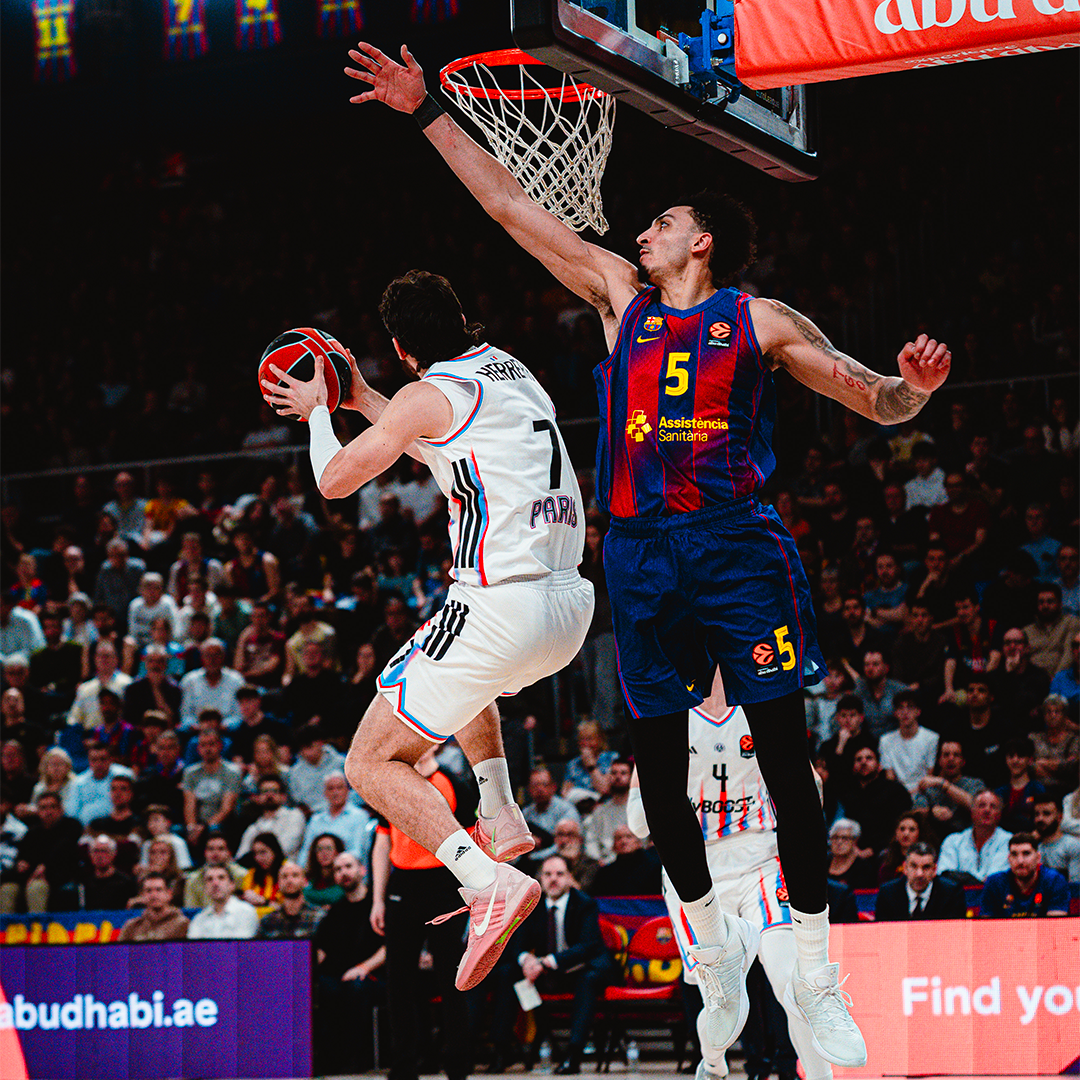
Dubai Basketball’s end-of-season saviour has finally opted for Catalonia. Aleksander Sekulić’s FC Barcelona are making their mark from the perimeter, continuing in the same vein as last season under Xavi Pascual. Whether through a devastating step-back or a catch-and-shoot, the Blaugranas have one of the highest volumes of long-range attempts in the EuroLeague. As an added bonus, they make significant use of fast breaks.
In half-court play, the game is structured around a succession of screens and pick-and-rolls. The Slovenia national team coach is also not afraid to hand the reins to his most talented players. Less established defensively speaking, Barcelona relies above all on a huge outpouring of energy to stifle the opposition’s ball-handlers.
Club history
It was one year after the club’s founding that FC Barcelona’s basketball section played its first official matches in 1927. However, it was not until after the Spanish Civil War (1940) that the Blaugrana began to make their mark in Spain, as evidenced by their six Catalan championships and six Copa del Rey titles. Having established themselves on the Spanish scene, the Catalans were even among the first six teams to take part in the national championship in 1956. Three seasons later, they achieved the Liga-Copa double.
This stellar campaign gave way to the worst period in the club’s history. From the elite of Spanish basketball, FC Barcelona found themselves as outsiders in the race for the Catalan championship. First, in 1961, Enric Llaudet – then president – decided to disband the section before quickly backtracking. Then, in 1964, the federation suddenly reduced the number of places in the top flight and sent the Blaugranas down to the Segunda. That too did not last long, as they bounced back the very next year. The Catalans pressed on to reach their first European Cup final. The Catalans’ true return to the top flight came in 1978 following a 103-96 victory in El Clásico in the Copa del Rey final.
This title marked the start of a new era studded with trophies. From Juan Antonio San Epi in the early 1980s to Roberto Duenas in the late 1990s, FC Barcelona racked up trophies at every level. In Spain, the Catalans achieved the feat of winning three consecutive league titles on two occasions. All this was complemented by domestic cups and one Super Cup. But above all, this era brought the club its first European Cup in its history. In the wake of the trauma of 1984 in the European Champions Cup (C1) (a defeat in the final against Roma after leading by 14 points at half-time), Barça overcame Zalgiris Kaunas in the 1985 European Cup Winners’ Cup (C2) with a score of 77-73. Three more European titles followed in four finals… but still no EuroLeague (C1).
The new millennium began with two Cup-League doubles. With legends Šarūnas Jasikevičius and Juan Carlos Navarro under his command, Svetislav Pešić led FC Barcelona to its first EuroLeague (C1) title in 2003. The beginnings of a golden era under the guidance of Xavi Pascual. Promoted to head coach in 2008, the Catalan tactician secured successive qualifications for the final stages of FIBA’s premier competition. This continued until the club secured its second title in Paris in 2010, following a final they dominated from start to finish against Olympiacos (86-68). The Blaugranas then went on to win one title every season for the next four years.
This exceptional run of form in Europe came to an end in 2016, when Xavi Pascual left the club. In 2018, FC Barcelona even recorded their worst start to a season in 41 years. More recently, Šarūnas Jasikevičius’s tenure has brought a great deal of positivity to Catalonia, culminating in a EuroLeague (C1) final in 2021. While consistency remains, moments of brilliance are still few and far between. Returning to the club this summer, the legendary Xavi Pascual symbolises the Catalans’ determination to return to the top of the Old Continent.
awards and honors
| EuroLeague (C1) | 2003 / 2010 | |
| European Cup Winners’ Cup (C2) | 1985 / 1986 | |
| Korać Cup (C3) | 1987 / 1999 | |
| Spanish Champion | 1959 / 1981 / 1983 / 1987 / 1988 / 1989 / 1990 / 1995 / 1996 / 1997 / 1999 / 2001/ 2003 / 2004 / 2009 / 2011 / 2012 / 2014 / 2021 / 2023 | |
| Spanish Cup | 1943 / 1945 / 1946 / 1947 / 1949 / 1950 / 1959 / 1978 / 1979 / 1980 / 1981/ 1982 / 1983 / 1987 / 1988 / 1991 / 1994 / 2001 / 2003 / 2007 / 2010 / 2011 / 2013 / 2018 / 2019 / 2021 / 2022 | |
| Spanish Supercup | 1987 / 2004 / 2009 / 2010 / 2011 / 2015 |
Zoom : The dissolution
On 3 July 1961, Enric Llaudet – president of FC Barcelona – decided to disband the club’s basketball section. This came as a surprise to the other board members and the fans alike. Officially, the reason given was purely financial.
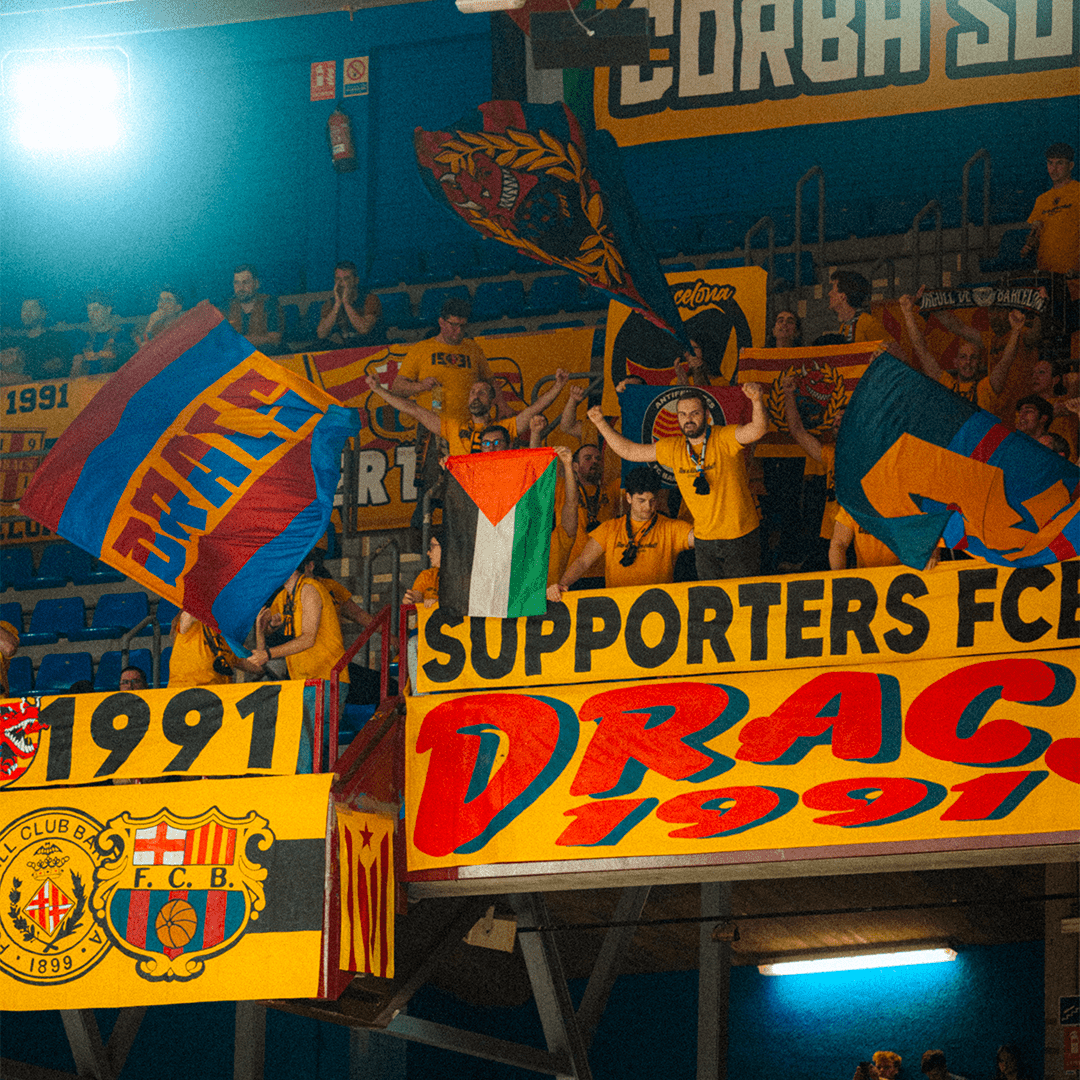
However, the growing popularity of FC Barcelona Baloncesto prompted Enric Llaudet to reverse his decision one year after the announcement. This was partly thanks to the campaigning of the Blaugrana supporters.
The Number : 20
That is the number of wins FC Barcelona racked up during their 2009–10 EuroLeague season – with just two defeats, it is the best record of all time in the competition’s modern era.
Other Teams