Valencia Basket

Valencia Basket
| Foundation | 1986 | |
| Arena | Roig Arena | |
| Championships | Liga ACB / EuroLeague | |
| Coach | Xavi Albert | |
| Famous players who have played for the club | Bojan Dubljević / Nando de Colo / Fabricio Oberto |
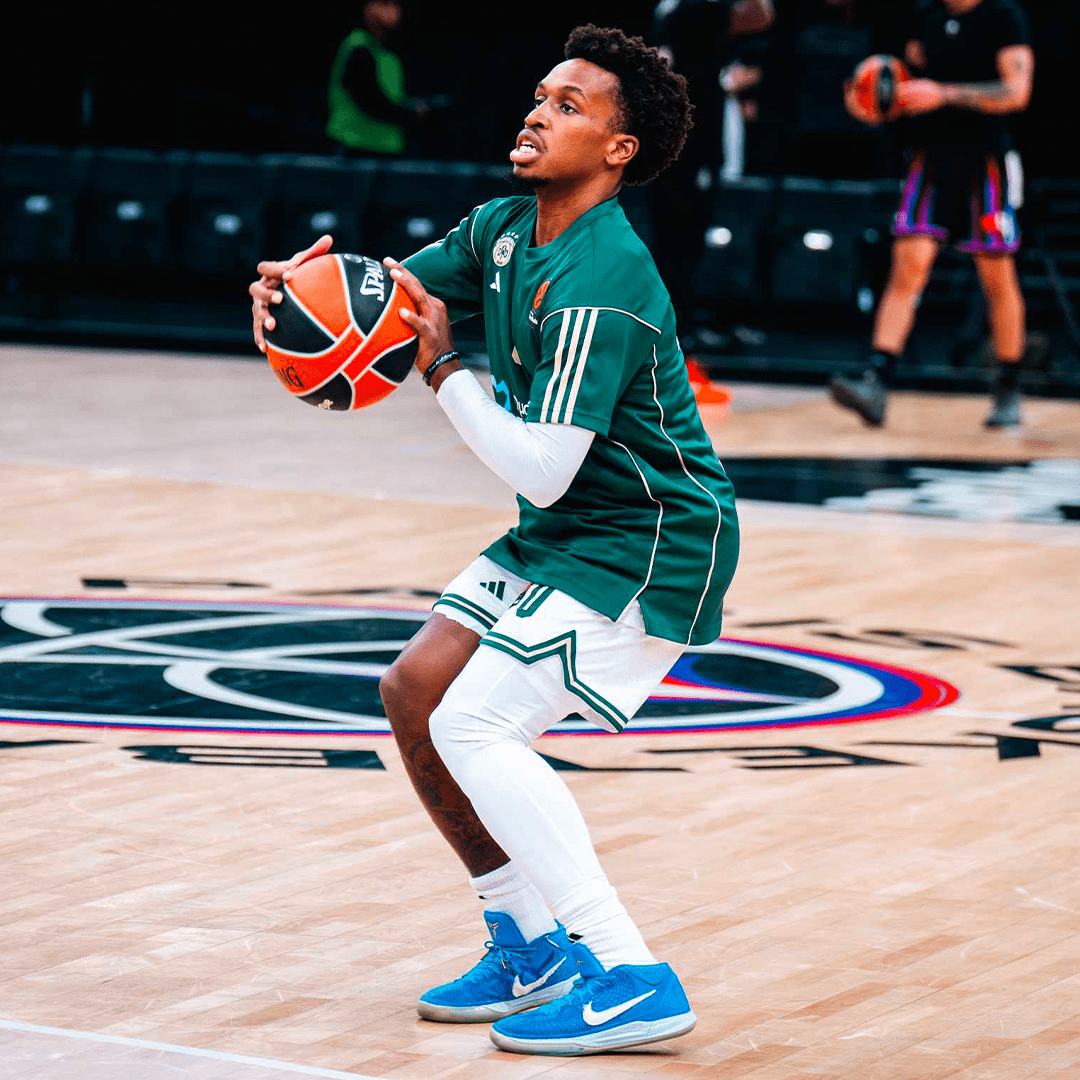
Player to watch : T.J. Shorts
Will the player ranked third in the 2025 MVP standings completely revitalise Valencia? Already impressive under Tuomas Iisalo in Bonn, T.J. has taken a huge step forward at Paris Basketball. Twice named Betclic ÉLITE MVP during his two seasons in France, the point guard is shining just as brightly in Europe. First by winning the 2024 EuroCup (C2), then by leading the Parisian club to the brink of the Final Four.
Accurate, skilful, clutch, intelligent… T.J. Shorts is the epitome of the ideal point guard. A meteoric rise that came to an abrupt halt during the 2025–2026 season. Whilst his move to Panathinaikos was meant to be a huge stepping stone, the story ultimately turned sour. With little playing time and poorly utilised, the American joined Valencia with a view to making a fresh start.
The keys to the ‘Orange Truck’ will be in T.J.’s hands. It’s now up to him to return to his former glory !
Playing style
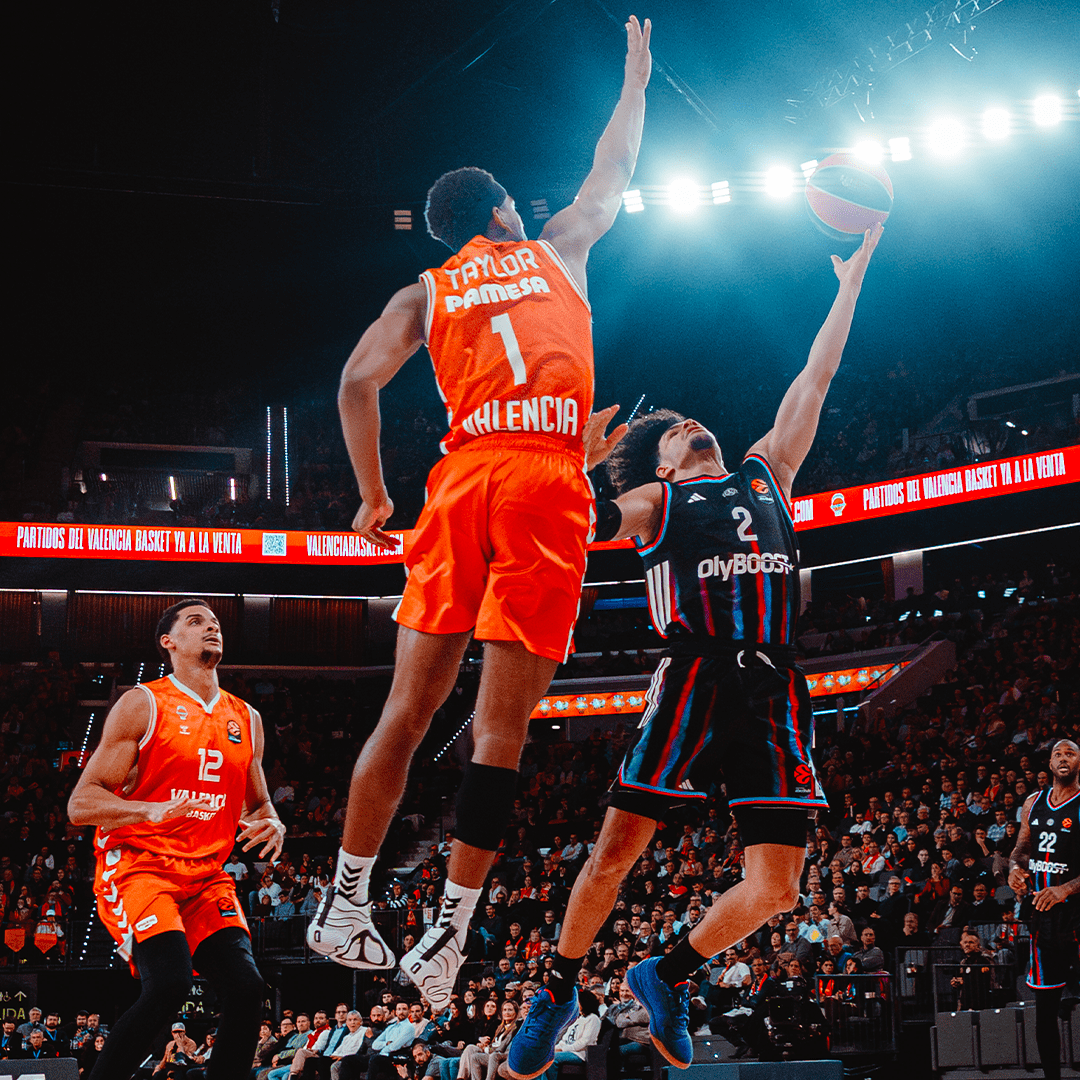
Continuity is the order of the day in Valencia. The Spanish champions have decided to promote none other than Pedro Martínez’s former assistant coach – Xavi Albert – to the role of head coach. With this decision, the club aims to “remain true to its philosophy of promoting talent from L’Alqueria del Basket once they are ready”. Among the Taronges, there are no heroes, no franchise player as such, but an approach based first and foremost on teamwork.
They are also said to have one of the youngest squads in the competition, which gives them a unique burst of energy and athleticism. This combination enables them to excel in transition. Constantly on the move without the ball, the Valencian players excel in the art of creating space. As a result, once they’ve found space, they have the time needed to make the best decision.
Valencia are, above all, an attack-minded side, though they do not shy away from defence. Aggressive in pressuring the ball-carrier, their defence – which is particularly focused on the back lines – constantly seeks to force turnovers and interceptions. Pressing again and again until the opposition is overwhelmed. That is the aim of this team when they do not have the ball !
History of the club
The birth of Valencia Basket stemmed from the decline of Valencia Football Club. Faced with relegation to the Spanish second division and the financial difficulties that followed, Los Ches decided to shut down all the club’s sporting sections during the summer of 1986… including basketball! This came at a bad time, as the city’s basketball players were beginning to build a dedicated community thanks to their strong on-court performances. In view of the enthusiasm generated, the former director of the basketball section – Vicente Solá – decided to set up a separate basketball entity as early as September 1986. An initiative supported by the federation, which offered them a place in the second tier of the top flight for their debut season. A path to the very top made all the easier by the fact that, at the end of the 1987–1988 season, the Liga expanded from 16 to 24 teams, meaning eight promotion spots. The opportunity was too good to miss! The Taronges went all in, kept only two players, invested heavily and eventually secured promotion!
The early-season excitement gave way to fierce competition. Initially a second-tier side, Valencia secured a place in the play-offs four times in a row up until the 1994–95 season. Having been at the club for two and a half years, Manu Moreno was relieved of his duties as head coach during an extremely difficult season. But the shake-up failed to work, and the club were relegated following an unfortunate play-off against Somontano Huesca. Mihajlo Vuković’s men secured promotion the very next year, however. Except that this time, La Liga had reduced the number of promotion spots. The Valencians still managed to reach the top flight by purchasing the rights to the spot vacated by Amway Zaragoza. Following this eventful episode, the Taronges flourished under Nacho Rodilla, eventually winning their first trophy with the 1998 Copa del Rey against national champions Joventut de Badalona (89-75).
The 2000s began much like the turn of the millennium. Although Mihajlo Vuković left the orange and white side, Valencia maintained its upward trajectory. Boasting big names such as Fabricio Oberto, Dejan Tomašević and Alejandro Montecchia, this generation reached the league finals for the first time in 2003. But Spain wasn’t enough! At the same time, the club explored the continental stage through the Saporta Cup (C2): 2000 – quarter-finals, 2001 – semi-finals, 2002 – final and 2003 – victory! This exponential rise was confirmed in the EuroLeague (C1). Bolstered by the signing of Antoine Rigaudeau, the team narrowly missed out on the playoffs after refusing to face Maccabi Tel Aviv in Israel. This elimination marked the end of this first European chapter. This was followed by two lean years, a spring clean across all levels of the management, and the recruitment of MVPs in the form of Dejan Milojević and Rubén Douglas. The Taronges reached the Liga quarter-finals, and in 2010, they embarked on another epic EuroCup (C2) campaign, culminating in a ruthless victory over Alba Berlin (67-44).
The contract extensions for Neven Spahija, Thomas Kelati, Kosta Perovic and, above all, Matt Nielsen offer Valencia a guarantee of stability for the seasons ahead. Finals are becoming a regular occurrence on the Iberian coast. From the 2011 Super Cup to the 2013 Copa del Rey, via the 2012 EuroCup (C2), the club racked up a string of strong performances, albeit without a gold medal. That run of bad luck was finally broken in the 2014 EuroCup against UNICS Kazan (80-67/85-73). Reaching the semi-finals of both the domestic cup and the league, the Taronges put in a stellar campaign. In the summer of 2015, Velimir Perasović left the Valencia bench. Replaced a few months later by Pedro Martínez, the Spanish coach laid the groundwork before delivering the club’s greatest season to mark its 30th anniversary in 2017. Beyond yet another EuroCup (C2) semi-final followed by a Copa del Rey final, Valencia caused a sensation against Real Madrid in a frenzied Fonteta and won their only La Liga title. A monumental achievement coupled with a Super Cup triumph.
To build on this momentum, the club appointed Jaume Ponsarnau, who had been assistant coach since 2016, as head coach. It proved to be a masterstroke, as Valencia added a fourth EuroCup (C2) to their trophy cabinet in 2019 thanks to another impressive performance against Alba Berlin (89–75, 92–95, 89–53). Since then, the team has fluctuated between the EuroLeague (C1) and the EuroCup (C2). Most recently, the side led by the returning Pedro Martínez reached the 2025 Liga finals before going on to take their revenge on Real Madrid in the 2025 Super Cup. Driven by young talents such as Sergio De Larrea, the new occupants of the Roig Arena are continuing in their footsteps by producing one of, if not the best, seasons in the club’s history. As well as lifting their second Spanish league title, the Taronges caused a sensation by qualifying for the 2026 EuroLeague Final Four following a historic quarter-final against Panathinaikos (3–2 after trailing 0–2). More than ever, Valencia are determined to challenge the dominance of the giants from Madrid and Barcelona even further.
awards and honors
| EuroCup (C2) | 2003 / 2010 / 2014 / 2019 | |
| Spanish champion | 2017 / 2026 | |
| Spanish Cup | 1998 | |
| Spanish Supercup | 2017 / 2025 |
Zoom : Roig Arena
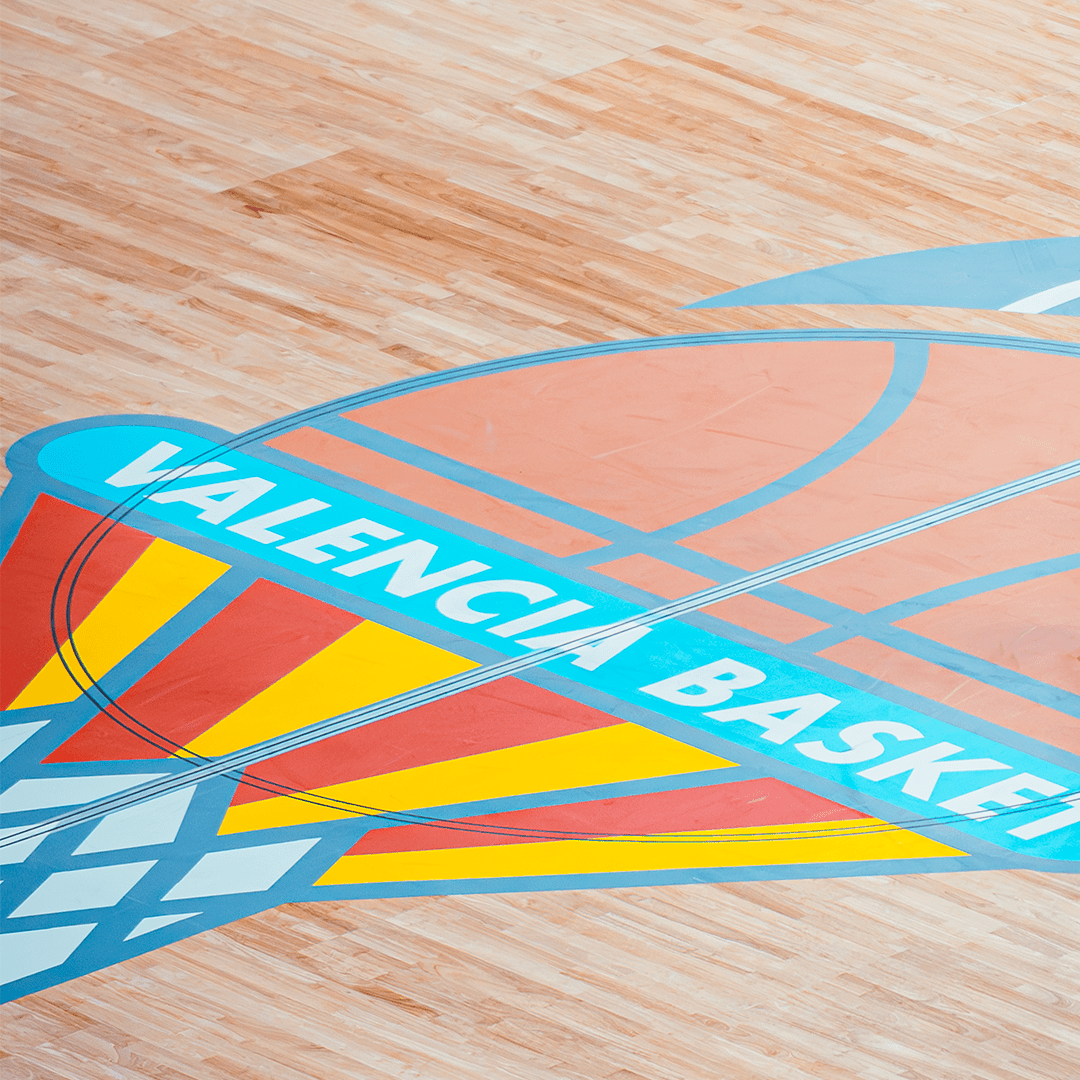
Originally scheduled for 2023, the Roig Arena finally opened its doors on 6 September 2025 as the home ground of Valencia Basket. Named in honour of the founder and president of Mercadona (a Spanish food retail company specialising in local supermarkets), the arena has a capacity of 15,600 spectators on match days. Although for concerts, it can accommodate up to 18,600 or even 20,000 people.
This €300 million investment stands out in particular for its ultra-modern design, very much ‘NBA-compatible’. With giant screens, lighting effects and 360-degree LED displays, the Roig Arena is designed to add an extra touch of spectacle to basketball matches. A symbol of the club’s new scale, this venue meets the growing demands of European basketball in terms of capacity and comfort.
The Number : 2025
This is the year the Roig Arena opens – making it the newest venue in the EuroLeague.
Other Teams