Virtus Bologna

Virtus Bologne
| Foundation | 1871 | |
| Arena | Virtus Arena | |
| Championships | LBA Serie A / EuroLeague | |
| Coach | Nenad Jakovljević | |
| Famous players who have played for the club | Emanuel Ginóbili / Antoine Rigaudeau / Miloš Teodosić |
Player to watch : Kevin Kokila
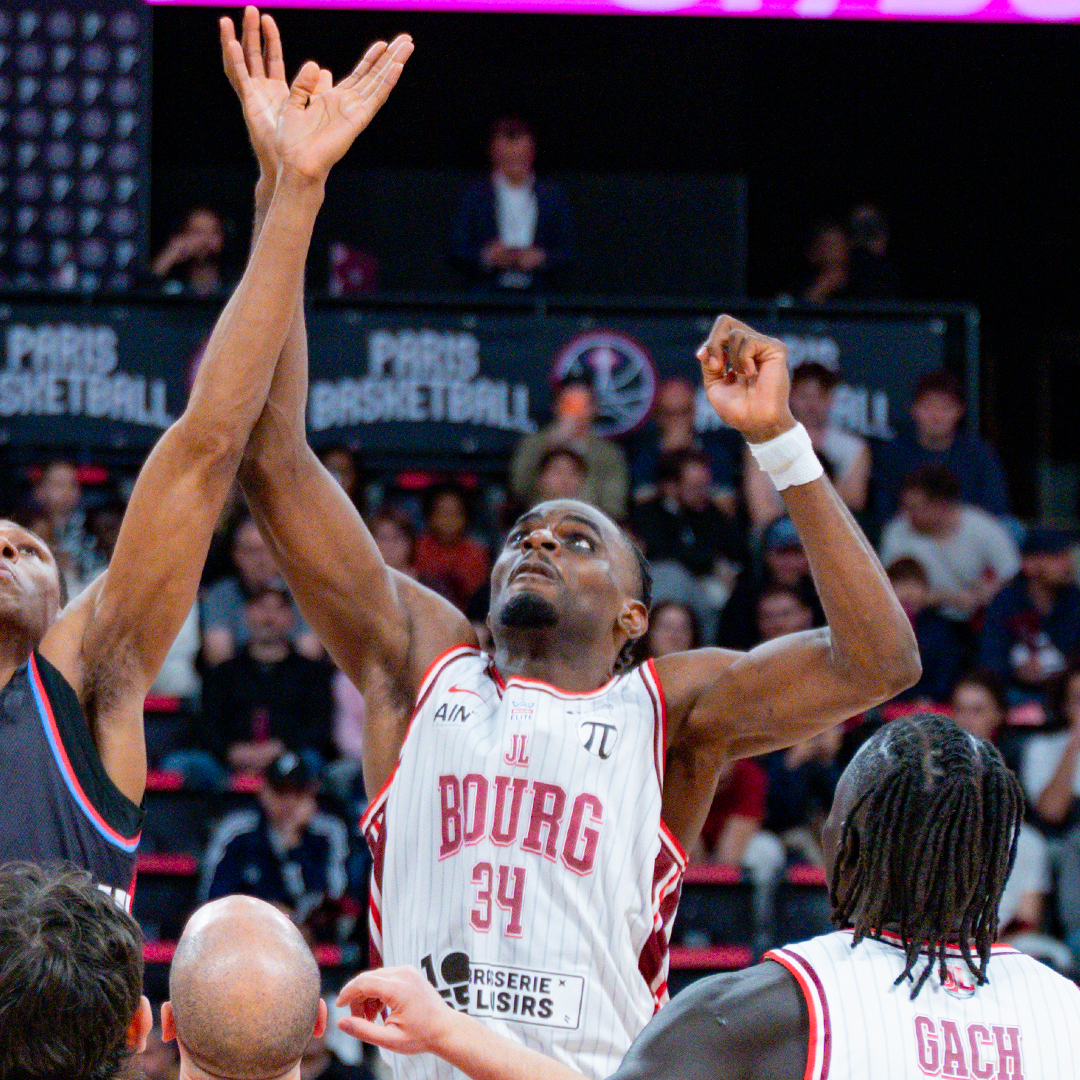
Fresh off a 2026 EuroCup victory with Bourg-en-Bresse, Kevin Kokila is playing his first EuroLeague season. It is a remarkable rise for a player who, just after the COVID pandemic, was competing in the French third division. Nothing predestined the Angolan international to reach such a level, especially given that he only took his first steps in club basketball at the age of 15. This late entry into the sport quickly drew attention, leading to his arrival at the ASVEL youth academy in 2019. Despite winning the “Trophée du Futur” in 2021, he began his professional career with Lyonso Basket.
His talent finally stopped flying under the radar when JL signed him in the summer of 2022. Kevin Kokila climbed the ranks at Bourg one by one, eventually serving as captain during his final campaign in France. He is a natural-born leader, as evidenced by his team’s 2025 African Championship victory. An athletic center capable of compensating for his lack of height with explosive power, the Dubai player – currently on loan to Virtus – has one season to prove himself among the elite of the Old Continent.
Playing style
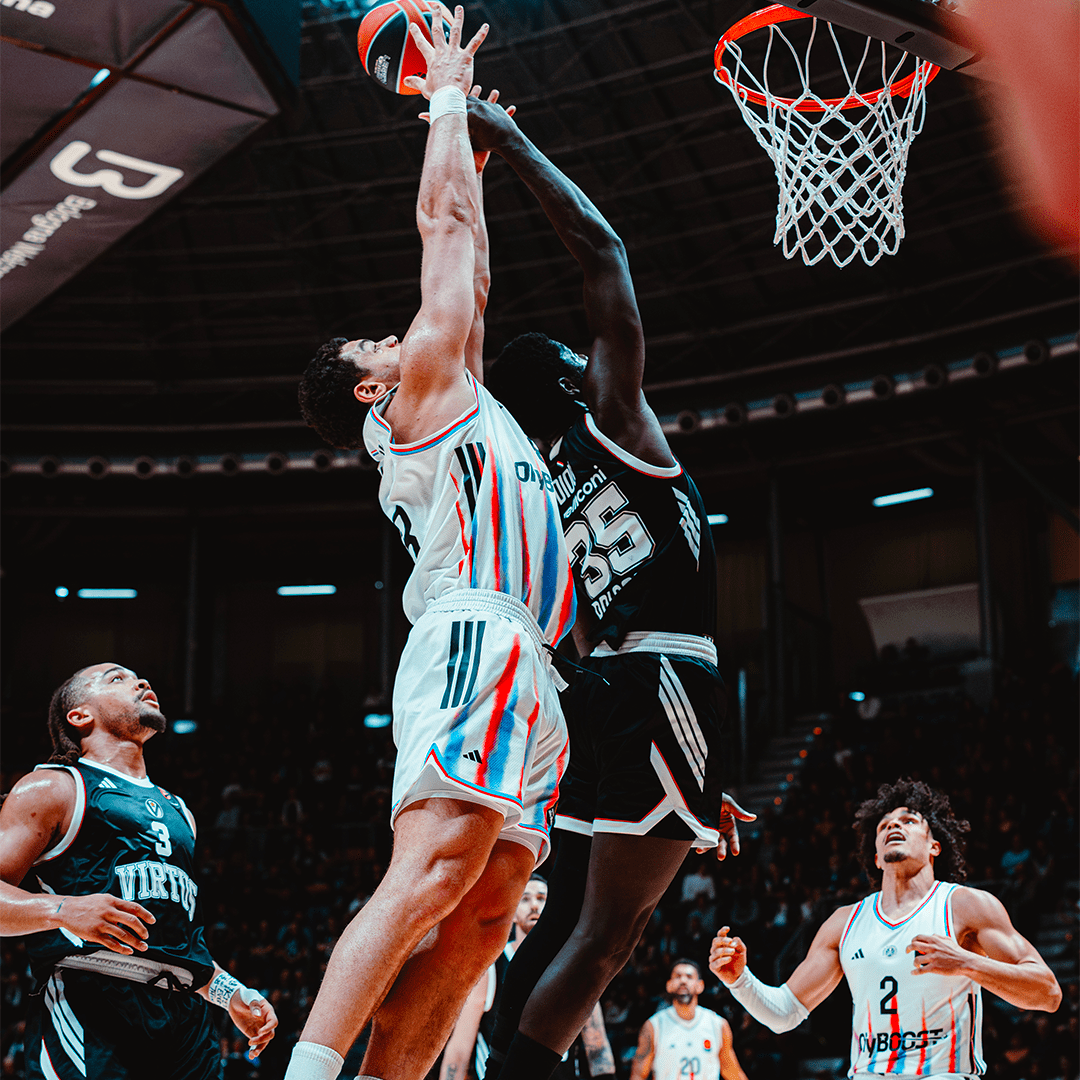
When dissecting this Virtus Bologna squad, one must start with a key observation: they are not elite in any single area. There is no true superstar on the team – no player capable of single-handedly winning games on a regular basis. Yet, this works to their advantage thanks to Álex Mumbrú’s tactical approach. A product of the Valencia school of thought, the coach – who won the 2025 European Championship with Germany – rarely builds his teams around just one or two stars. Consequently, he employs much deeper rotations, assigning everyone a specific role. Regardless of the specific task, however, there is a common thread: bringing intensity.
Virtus’s offense relies on a well-oiled collective effort. There is very little isolation play; instead, the focus is on spacing, movement, and flexibility that adapts to whichever player happens to be hot. The goal is to ensure the threat comes from everywhere. Alex Mumbrú also places a heavy emphasis on defense, demanding maximum intensity against the ball-handler, rapid help defense, and sustained control of the offensive glass. All of this is coupled with constant activity, allowing them to switch into transition mode the moment they regain possession.
Club History
On the evening of 17 January 1871 at San Domenico Primary School, the teacher from the Società Sezionale di Ginnastica founded an organisation that would become Sef Virtus Bologna. As symbols, four Fs arranged in a Roman cross were chosen: strong, honest, steadfast and proud. Words that remain the club’s motto to this day. The first basketball team was formed more than 50 years after the club’s creation, in 1927. The Bianconeri climbed the ranks. But once they reached the top flight, they went on to finish in the top spots time and again without ever managing to lift the trophy. It wasn’t until the end of the Second World War that the club began to add its first titles to its honours list. Those early years gave way to a period of dominance, as under Renzo Poluzzi, the Bolognese side won four consecutive Scudetti before securing back-to-back titles (1955–1956). Meanwhile, another powerhouse of Italian basketball had returned to the standards of the 1940s: Olimpia Milano. This rivalry would deprive Virtus of numerous titles, particularly during the 1960s. Despite the advent of European competitions, the trophy cabinet remained completely empty throughout the decade.
This stagnation was brought to a sudden halt by the appointment of lawyer Gianluigi Porelli as head of the club in 1968, alongside Giovanni Elkan for the basketball section. Whilst sporting results did not improve significantly until 1973, the club’s financial health began to recover. With its foundations now consolidated, Bologna was ready to take the next step. This began with the arrival of the former Chilean national team coach, Dan Peterson, followed two years later by the recruitment of Tom McMillen. Bologna thus reached the quarter-finals of the 1975 European Cup Winners’ Cup (C2), won its first league title in 22 years the following season, and finally fell just two points short of success in the 1978 Cup Winners’ Cup (C2). The rise to prominence continued under Terry Driscoll with another back-to-back LBA title, the first cup-and-league double, and this time the 1981 European Champions Cup (C1) final, which was also lost by the narrowest of margins to Maccabi Tel Aviv (80-79). This ultra-demanding Porelli era came to an end with ‘Sugar Mania’. Why the name? Following Ettore Messina’s appointment in 1989, the club brought in former NBA All-Star Michael ‘Sugar’ as well as NBA champion Clemon Johnson. Together, this small squad avenged 10 years of frustration by finally winning the 1991 Cup Winners’ Cup (C2) against Real Madrid (79-74).
Immediately following this remarkable achievement, Gianluigi Porelli sold Synudine Bologna, which became Virtus Bologna. The Cazzola era began with the signing of the mercurial shooting guard Predrag Danilović. The Bologna dynasty then took shape with a first Scudetto during Ettore Messina’s ‘last dance’, followed by a three-peat under Alberto Bucci. But on each occasion, there were no major achievements in the European Champions League (C1). Following two transitional seasons from 1995 to 1997, Ettore Messina made his grand return, bringing with him a certain Predrag Danilović, who had previously set out to conquer the NBA. Surrounded by Radoslav Nesterovič and Antoine Rigaudeau, the Black and Whites established themselves as THE best team on the continent at the turn of the millennium. In 1998, the club won the LBA in overtime of the final match thanks to Dominique Wilkins’ legendary foul on Danilović’s three-point shot. Shortly afterwards, Virtus lifted their long-awaited EuroLeague (C1) trophy against AEK Athens (58-44). There was another final the following year against Žalgiris Kaunas (82-74) before Alfredo Cazzola sold the club to Marco Madrigali in 2000.
In order to make a fresh start, Bologna went all-in on youth. Following in the footsteps of Jaric, Smodis, Manu Ginobili and others, Virtus racked up 33 consecutive wins across all competitions. Unsurprisingly, the 2000–2001 season culminated in a treble: the Coppa Italia, the league title and the Euroleague (C1). More of a flash in the pan than a new dynamic. The Bolognese failed to build on their success and Ettore Messina was sacked in the blink of an eye. Except that a pitch invasion by supporters ahead of a match against Pallacanestro Trieste forced Marco Madrigali to rehire the Italian coach. A domestic cup win followed by an unfortunate EuroLeague (C1) final later, the club found itself on the brink of bankruptcy. The situation became so dire that the Bianconeri were excluded from the LBA due to late payment of wages. Although bankruptcy was narrowly avoided, relegation was confirmed nonetheless. Rock bottom had been reached.
In the summer of 2004, the club regained its membership of the Italian Basketball Federation and was consequently able to use the name ‘Virtus Pallacanestro’ once again. Back in the top flight by 2005, the Bianconeri were making rapid progress. This resurgence was crowned in 2009 when, after a seven-year wait, Bologna’s trophy cabinet was opened to welcome the EuroChallenge (C3). This was followed by four consecutive defeats in the Italian Cup final and, a few years later, the club’s first-ever relegation. Once again, Bologna bounced back quickly. And once again, the Black V went on to lift yet another European trophy with the 2019 Basketball Champions League, their first Scudetto in 20 years, as well as the EuroCup (C2). They are currently the reigning Italian champions.
awards and honors
| EuroLeague (C1) | 1998 / 2001 | |
| Cup Winners’ Cup (C2) | 1990 | |
| EuroCup (C2) | 2022 | |
| EuroChallenge (C3) | 2009 | |
| Basketball Champions League (C3) | 2019 | |
| Italian champion | 1946 / 1947 / 1948 / 1949 / 1955 / 1956 / 1976, 1979 / 1980 / 1984 / 1993 / 1994 / 1995 / 1998 / 2001 / 2021 / 2025 | |
| Italian Cup | 1974 / 1984 / 1989 / 1990 / 1997 / 1999 / 2001 / 2002 | |
| Italian Supercup | 1995 / 2021 / 2022 / 2023 |
Zoom : Madison Square Garden
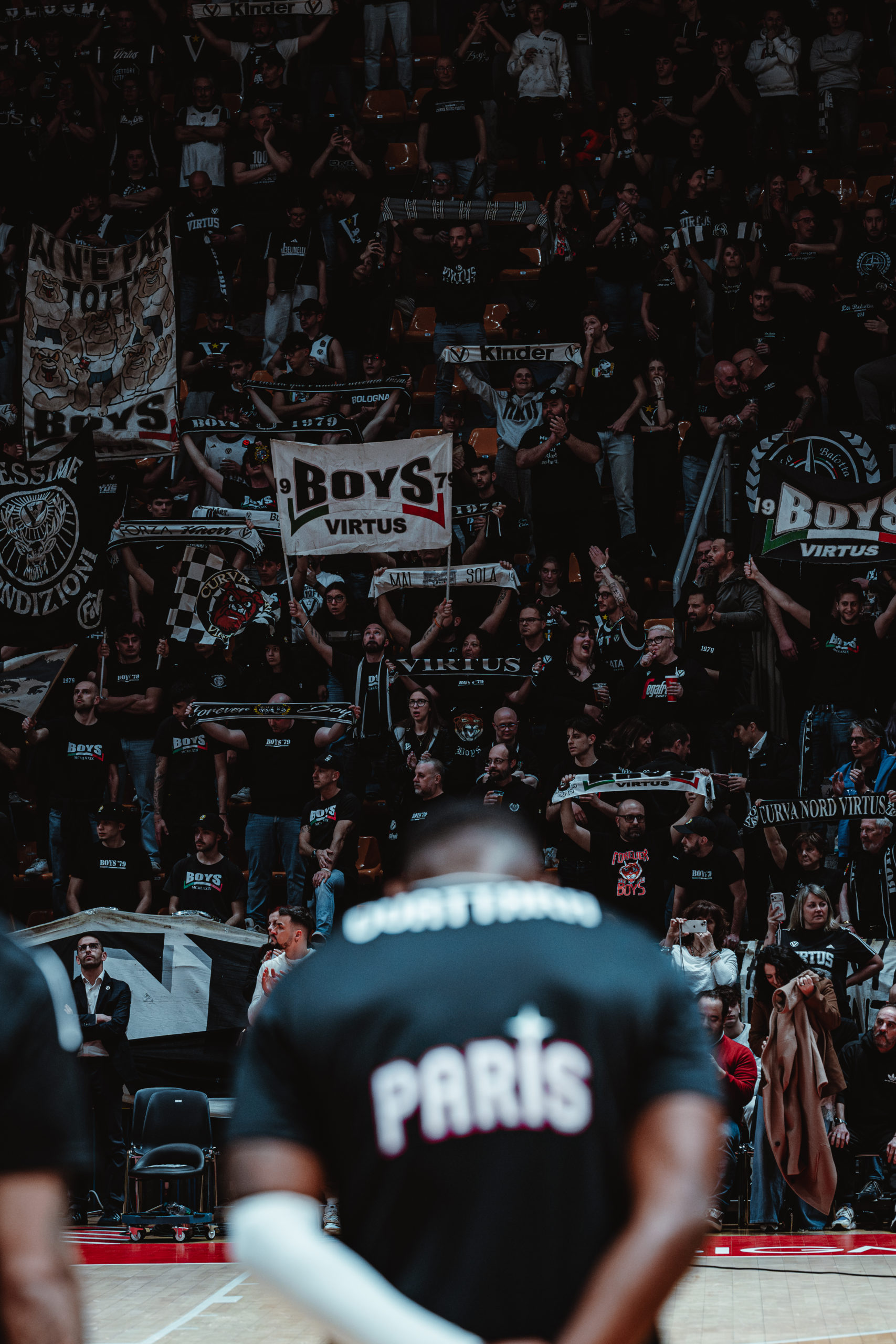
Virtus Bologna is the most ‘New York-esque’ of all European teams. The Knicks are, in fact, particularly popular in northern Italy. Here’s why! In the 1950s, the growing popularity of the four-time Italian champions prompted the city to build a new arena to replace the Sala Borsa. It was then, in 1956, that the club moved to the Giuseppe Dozza Arena. The new venue had a capacity of 7,000.
This arena, directly inspired by Madison Square Garden, was soon nicknamed ‘Il Madison’ by fans and the media. Then, following Dozza’s retirement from politics in 1966, the venue was officially renamed ‘PalaDozza’, although the nickname ‘Il Madison’ has remained part of popular culture.
The Number : 33
That is the number of steals made by Virtus Bologna on 1 February 2001 against Adecco Estudiantes – a record.
Other Teams