Panathinaikos Athens
Panathinaikos AKTOR Athens
| Foundation | 1921 | |
| Arena | Telekom Center Athens | |
| Championships | ESAKE / EuroLeague | |
| Coach | Željko Obradović | |
| Famous players who have played for the club | Dimitris Diamantidis / Dominique Wilkins / Vassilis Spanoulis |
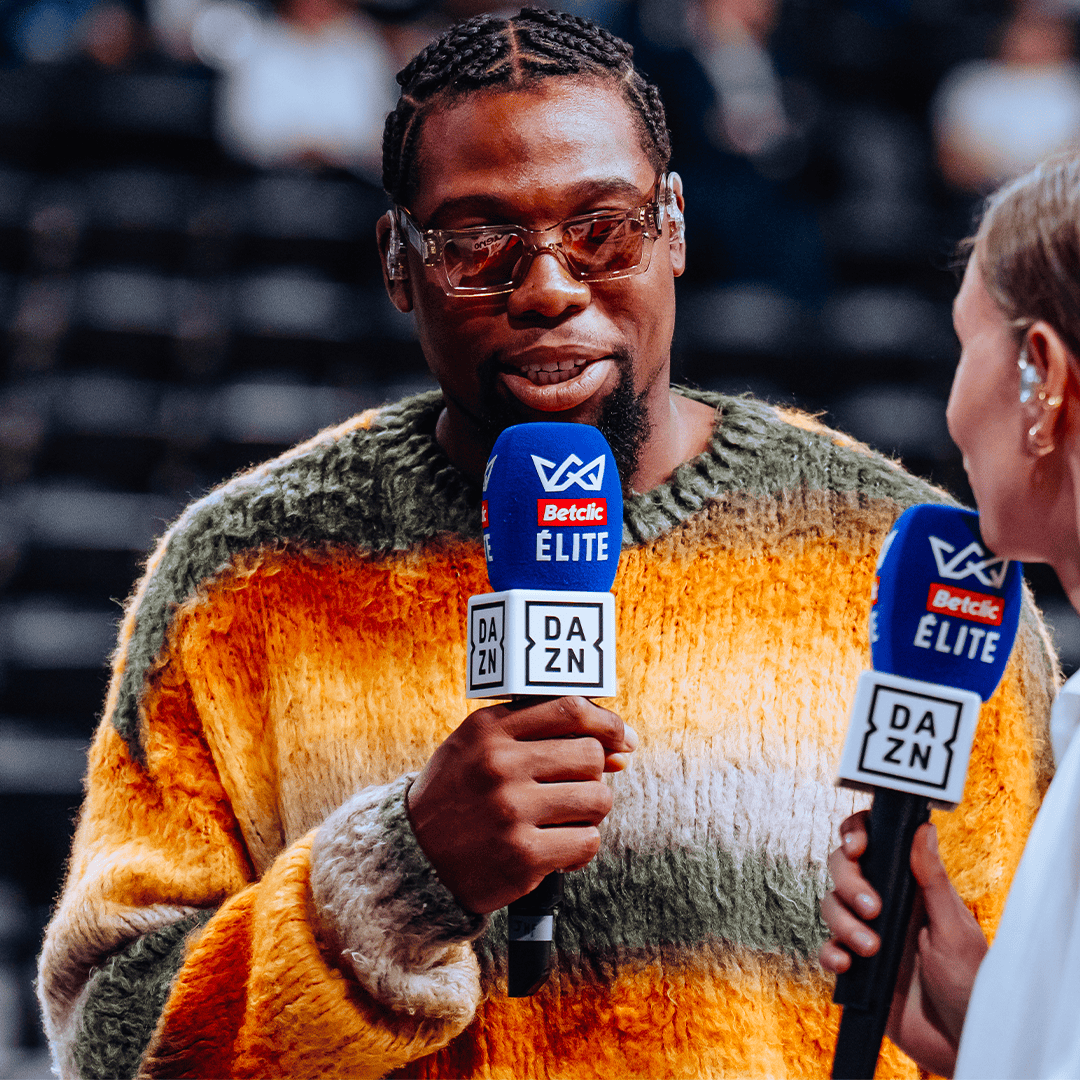
Player to watch : Guerschon Yabusele
Only a handful of people can boast of having posterised LeBron James. Me again, on global television. Amongst these players, who can be counted on the fingers of one hand, is Guerschon Yabusele! A famous night in the 2024 Olympic Finals which, by his own admission, completely changed his career. Despite a sensational start on French soil, the French international never really got his chance whilst playing for the Boston Celtics. Whilst ‘The Bear’ managed to relaunch his career brilliantly by winning domestic leagues and the EuroLeague with ASVEL and then Real Madrid, it was that performance against Team USA that saw him return to the NBA in the summer of 2024.
Now comfortably established at the world’s biggest club, the power forward decided to pay out of his own pocket to live the true American dream. In Philadelphia, Guerschon Yabusele is doing what he does best. In other words, this particularly agile powerhouse dominates the paint thanks to his physical presence, coupled with a shot that’s just as accurate from close range as it is from further out. Except that his signing for the New York Knicks – which was supposed to be his ticket to the next level – turned into a trade to the Bulls. Since then, at Panathinaikos, our Frenchman has always wanted to step out of his comfort zone and follow his heart. Make no mistake: if he’s left the NBA, it’s to reign even more supreme in the EuroLeague!
Playing style
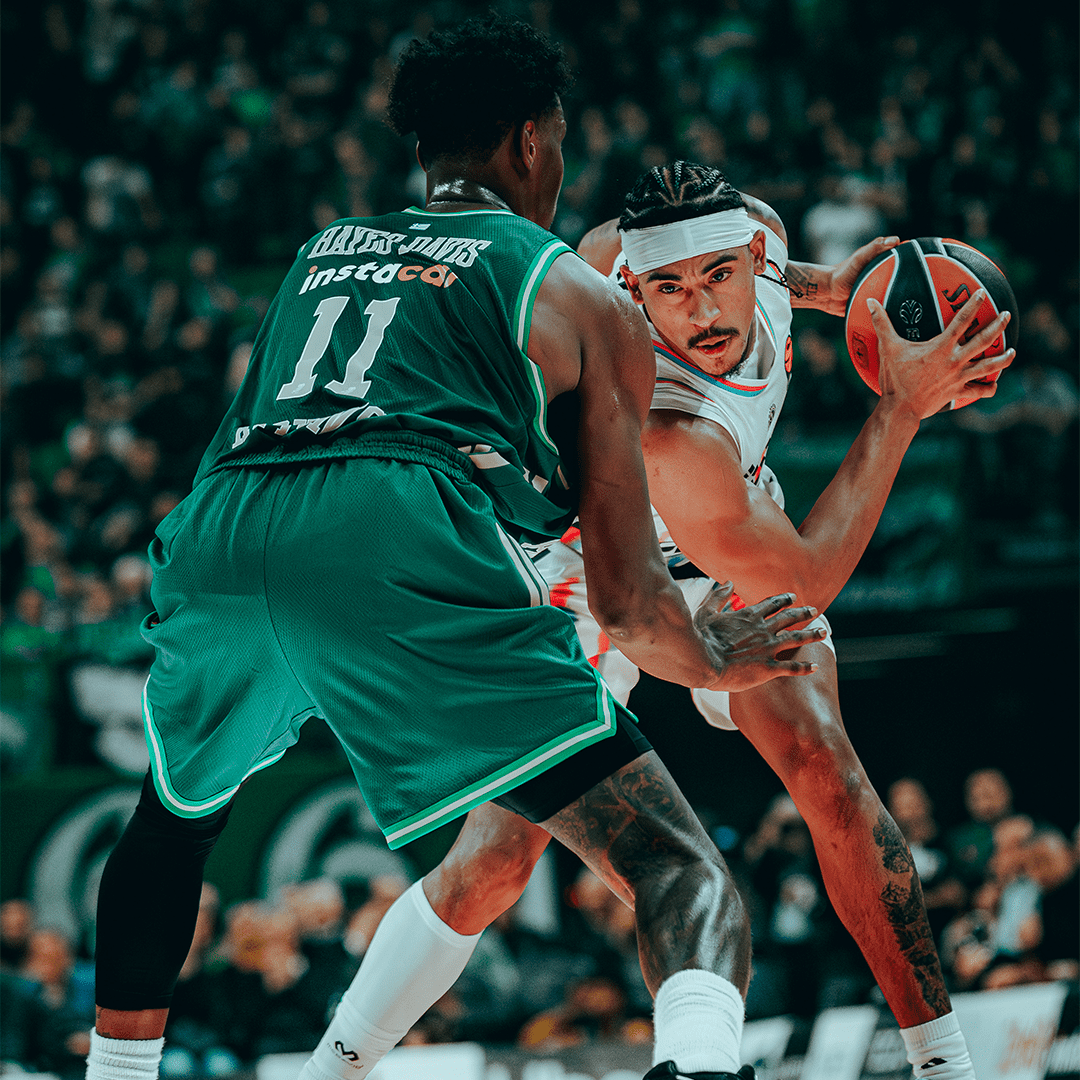
The greatest coach in the modern history of the EuroLeague returns to the place where he made history on the Old Continent. With a star-studded squad at his disposal, Željko Obradović relies on unchanging principles that are nonetheless adapted to the game of today.
Offensively, he does not impose a rigid game plan but prefers to give his star players, such as Francisco and Nunn, guidelines to follow in order to score. This explains why Panathinaikos’s ball-handlers move the ball up the court quickly, aiming to make the most of the 24-second possession. There is also optimal spacing, pick-and-rolls, rolling centres and constant tactical adaptation.
This fairly fluid system, capable of adapting to any opponent, is also evident when the team is off the ball. Attempts to trap opponents and double-teaming are undoubtedly the two main characteristics of the backline’s defence. As is this determination to constantly anticipate movements and passes.
Club history
Along with 40 other athletes, George Kalafatis founded the Panathinaikos Athletic Club in 1908, before adding a basketball section 11 years later. Almost to everyone’s surprise, the Athenians won their first championship as early as 1921, before entering a long period of turmoil. Trailing behind the YMCA, Ethnikos Athinon and Panionios in the league table, it was only after the Second World War that PAO returned to success with back-to-back titles.
After two more trophy-less seasons, Panathinaikos remained unbeaten for two years, winning the ESAKE in 1950 and 1951. A feat they repeated in 1954. Although the Athenians suffered a few setbacks, they dominated Greek football with four league titles won during the 1960s. A decade during which Pana discovered Europe. Their first appearance came in 1962, followed seven seasons later by a semi-final in the Cup Winners’ Cup (C2). The end of a cycle was marked by the signing of the first American player by a Greek club, in the form of Greenwood.
This new era was undoubtedly the most dominant on the domestic scene. The ‘4K’ generation (Kontos, Koronaios, Kokolakis, Kefalos) won 10 out of a possible 14 league titles, including five in a row. Similarly, between 1979 and 1983, Panathinaikos lifted three domestic Cups, alongside impressive performances in Europe with two Top 6 finishes in the European Cup (C1). But these 14 golden years gave way to 14 lean years in the ESAKE. The low point of this decline came in 1992, when the Athenians failed to qualify for a continental competition – a first since… 1967! Under the leadership of Kóstas Polítis, Panathinaikos bounced back in 1993. The club lifted the domestic cup and came within one match of regaining the Greek title, having refused to play the decider against Olympiacos due to refereeing decisions in the second leg of the final.
Panathinaikos was on the rise. And to take things to the next level, the Greek side decided to sign Božidar Maljković – then a two-time EuroLeague (C1) winner – in the summer of 1995. Backed by a strong squad led by Dominique Wilkins, PAO lifted their first EuroLeague (C1) trophy following a one-point victory over FC Barcelona (67-66). The season ended on a sour note following a heavy defeat in Game 5 of the league title decider against Olympiacos, despite securing another domestic cup. In the wake of a trophy-less season, the Athens-based team relied on its new Souboti-Radja duo to win the ESAKE and finally break the 14-year drought.
At the dawn of the new millennium, Panathinaikos made the best move in its history by appointing Zeljko Obradovic – already a three-time EuroLeague (C1) winner – as head coach. Building around swingman Dejan Bodiroga and then combo-guard Dimítris Diamantídis, the Serbian coach firmly put Pana on the European map. On the domestic scene, the Greens won nine consecutive league titles as well as six domestic Cups. And in the EuroLeague (C1), PAO claimed five of the first eleven titles of the 2000s. First in 2000, then in 2002 with two upsets against Maccabi Tel Aviv (73-67) and Bologna (89-83). Followed by two two-point victories a year apart against CSKA Moscow (93-91 in 2007 and 73-71 in 2009). All of this was capped off by the final EuroLeague (C1) of the Obradovic era in 2011.
The club was rebuilt brick by brick around Dimitris Diamantidis. Until his departure in 2016, Panathinaikos performed well in Greece, winning seven domestic trophies and reaching the play-offs on three occasions. But whilst the titles kept coming, behind the scenes instability was rife. Ten coaches came and went between 2019 and 2023 before Ergin Ataman was appointed. Under the Turkish coach, the Athenians returned to the play-offs and won the 2024 EuroLeague (C1), as well as staging a remarkable comeback against Olympiacos in the league finals.
awards and honors
| EuroLeague (C1) | 1996 / 2000 / 2002 / 2007 / 2009 / 2011 / 2024 | |
| Greek Champion | 1921 / 1946 / 1947 / 1950 / 1951 / 1954 / 1961 / 1962 / 1967 / 1969 / 1971 / 1972 / 1973 / 1974 / 1975 / 1977 / 1980 / 1981 / 1982 / 1984 / 1998 / 1999 / 2000 / 2001 / 2003 / 2004 / 2005 / 2006 / 2007 / 2008 / 2009 / 2010 / 2011 / 2013 / 2014 / 2017 / 2018 / 2019 / 2020 / 2021 / 2024 | |
| Greek Cup | 1979 / 1982 / 1983 / 1986 / 1993 / 1996 / 2003 / 2005 / 2006 / 2007 / 2008 / 2009 / 2012 / 2013 / 2014 / 2015 / 2016 / 2017 / 2019 / 2021 / 2025 | |
| Greek Supercup | 2022 |
Zoom : The club for all Athenians
AEK, Olympiacos Piraeus, Paniónios B.C., Peristeri B.C., Maroussi B.C… All of Athens’ professional basketball clubs are named after a neighbourhood in the capital, or even another city (AEK after Constantinople). This is a trend historically found in many Euroleague (C1) clubs – particularly in Turkey.
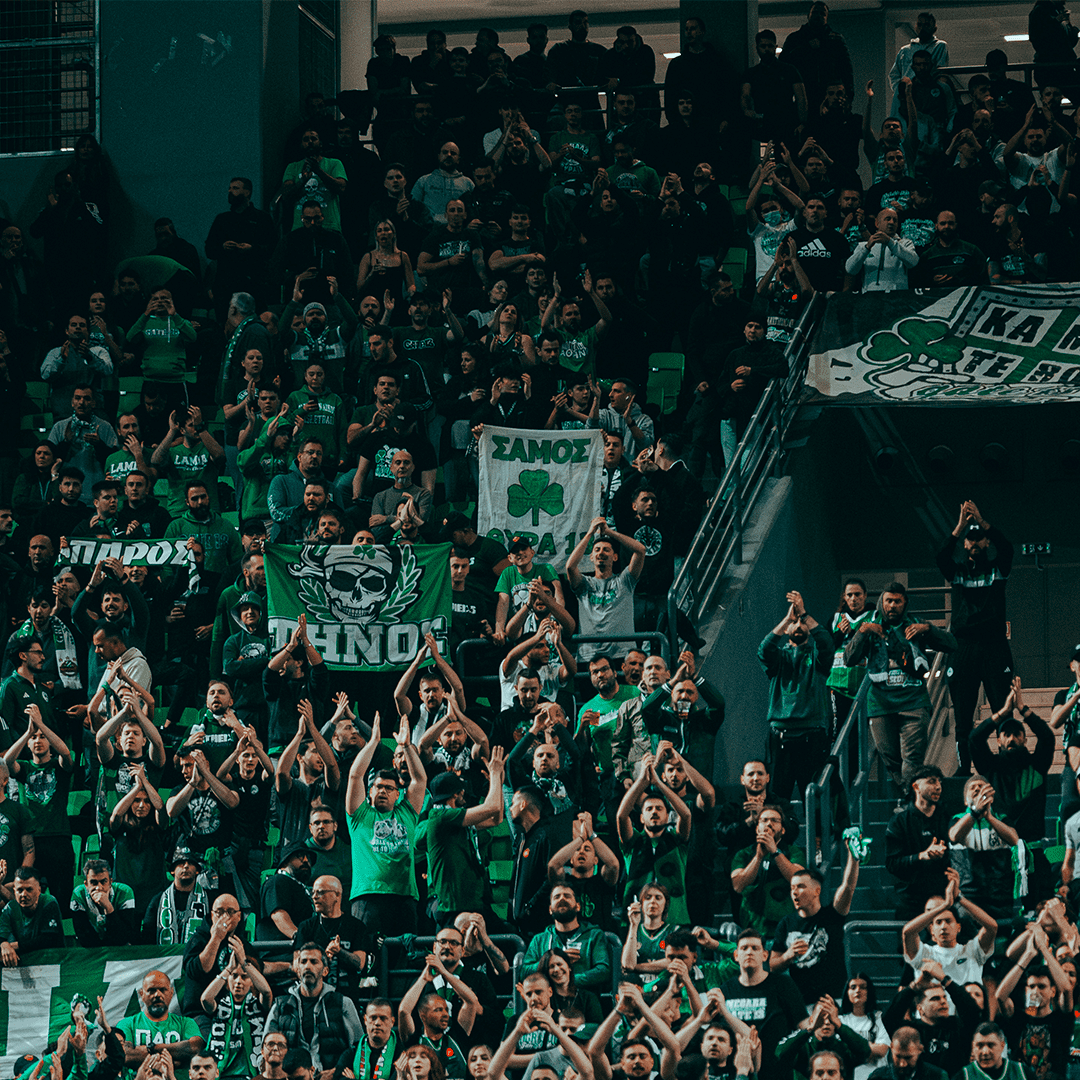
However, Panathinaikos has not attached itself to a specific area of the city. The club’s name literally means ‘All Athenians’. From its inception, Pana has therefore expressed the idea of representing all the inhabitants of Athens, and not just a single neighbourhood.
The Number : 41
That is the number of fouls committed by Panathinaikos against Skipper Bologna on 14 January 2004 – the highest number recorded in the modern era of the EuroLeague.
Other Teams