Kosner Baskonia Vitoria-Gasteiz
Saski Baskonia
| Foundation | 1952 | |
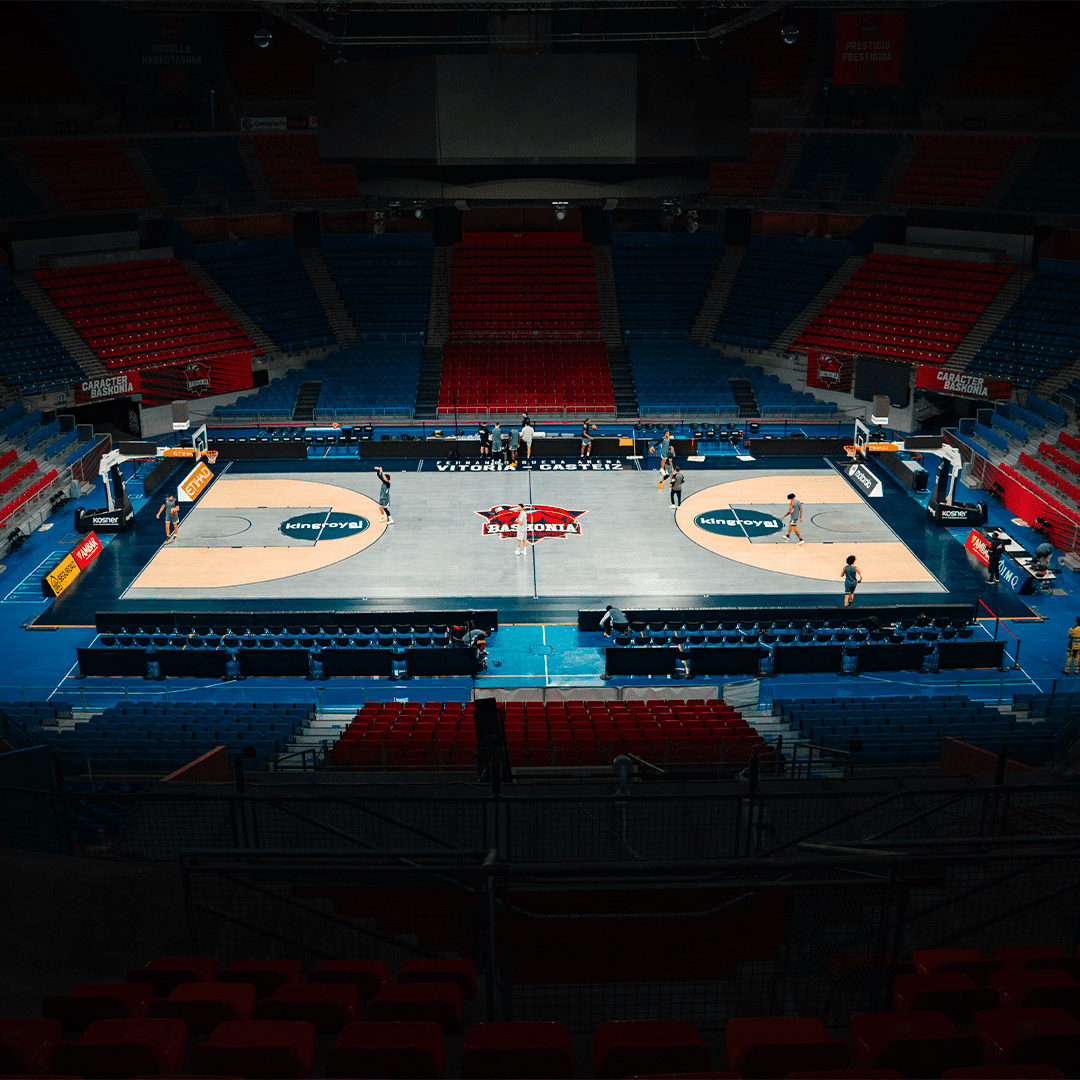
| Arena | Fernando Buesa Arena | |
| Championships | Liga ACB / EuroLeague | |
| Coach | Paolo Galbiati | |
| Famous players who have played for the club | Luis Scola / Lamar Odom / Goran Dragić |
Player to watch : Timothé Luwawu-Cabarrot
Amidst a summer of major change, the Basque club – a veritable talent mine – has held onto one of its most prized assets: Markus Howard. Now entering his fifth season with Baskonia, the American guard is no stranger to spectacular feats. His high school performances earned him a spot on Team USA, with whom he won the 2016 U17 World Cup. Before making history with the Spanish club, he cemented his legacy with the Marquette Golden Eagles by becoming the university’s all-time leading scorer in the NCAA.
After spending two seasons coming off the bench for the Denver Nuggets, Markus Howard arrived at the Fernando Buesa Arena, where he notably helped the team win the Spanish Cup in 2026. The New Jersey native plays an ultra-dynamic, high-tempo game, characterized by exceptional footwork. Although his 1.77-meter stature puts him at a disadvantage when playing off-ball, his main challenge will be maintaining the team’s performance level in the absence of Trent Forrest and Timothé Luwawu-Cabarrot—particularly in big games. However, the arrival of Kenneth Faried hints at the formation of a devastating new EuroLeague duo.
Playing style
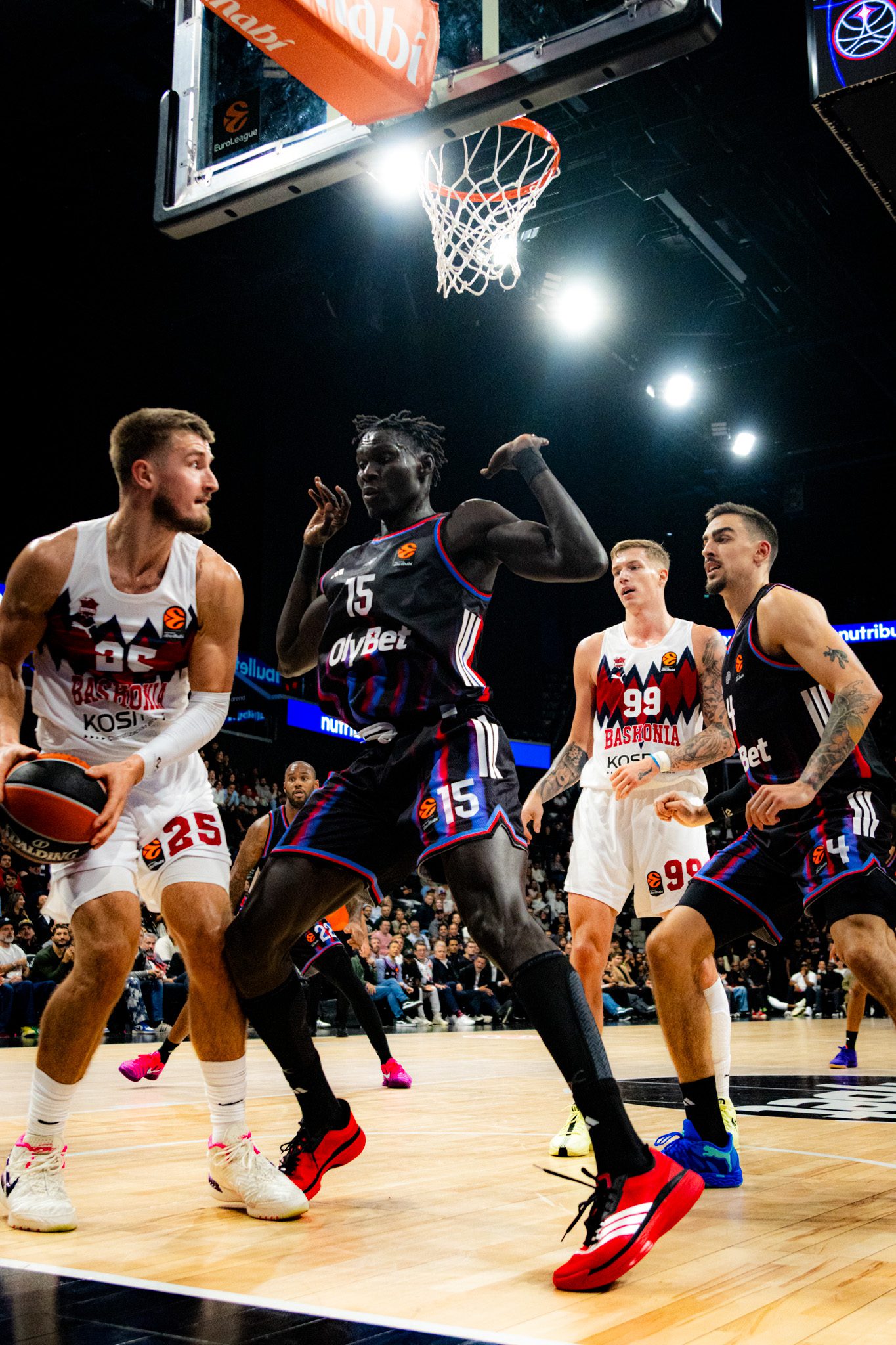
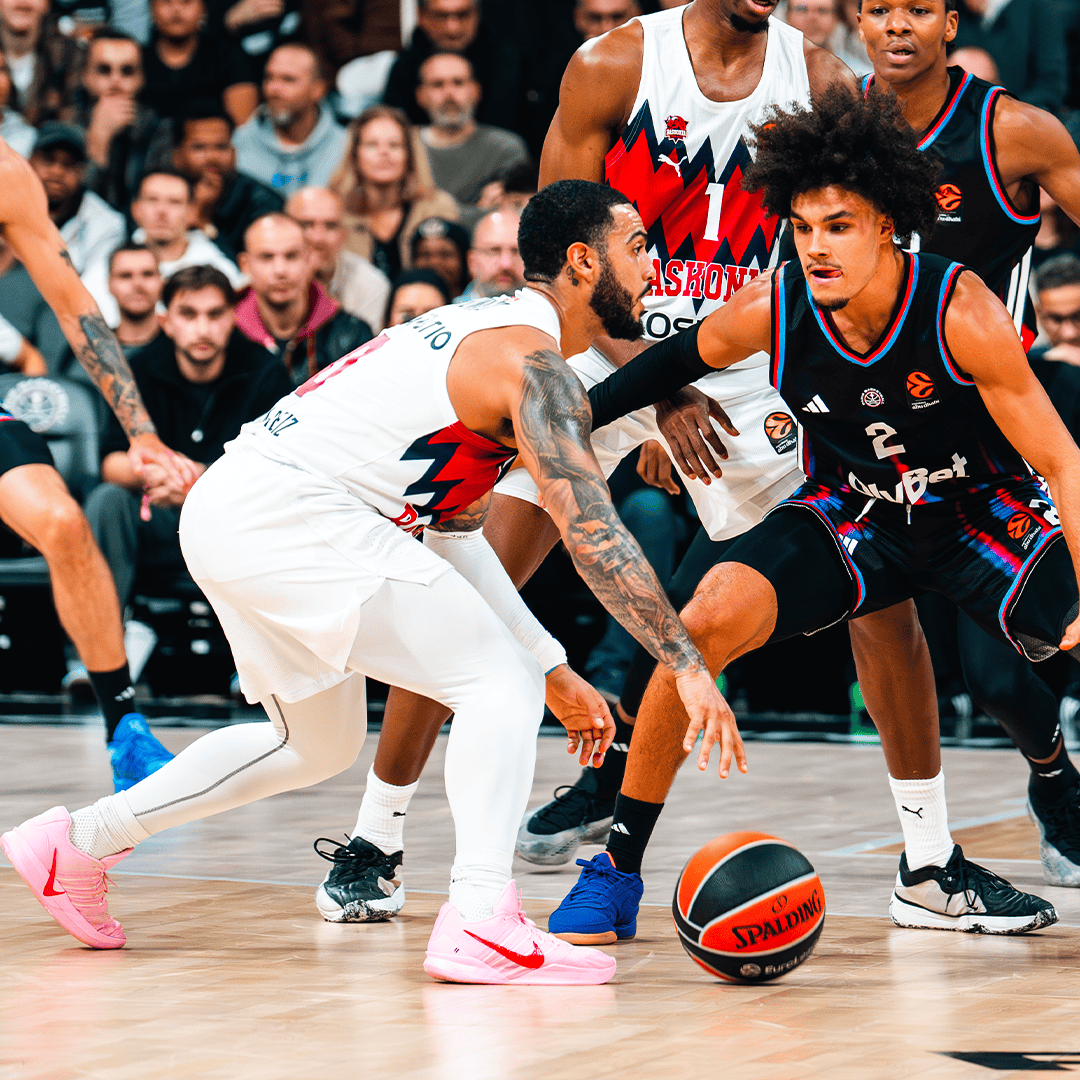
In the EuroLeague (C1), Baskonia is undoubtedly the team whose tactical philosophy most closely resembles that of Paris Basketball. Under the guidance of Paolo Galbiati, the Basques deploy an up-tempo, run-and-gun style in abundance. Small ball, catch-and-shoot, three-pointers, transition play… All the hallmarks of modern basketball are evident in this team.
This high tempo with the ball in hand translates into increased intensity without it. Baskonia seeks to truly stifle the opposition’s playmakers, with steals very much in their sights. It is a deliberate imbalance, given the profiles within the squad. In order to deploy such a profusion of energy, athleticism and mobility take precedence over physicality.
Club history
The history of Saski Baskonia dates back to before its official founding on 3 December 1952, the date on which Club Deportivo Vasconia was established. Due to poor results on the football pitch, Félix Ullivarriarrazua decided to strengthen the club’s other sections whilst creating new ones. This led to the creation of a basketball section in 1959. This decision soon proved beneficial, as the Basques climbed the lower leagues one by one. Their first ‘official’ title came in 1970 when they won the Spanish third division. And three years later, Club Deportivo Vasconia secured promotion to the top flight. This formative phase came to a definitive end in 1977 when the then president – José Luis Sánchez Erauskin – decided to change the V in Vasconia to a B in Baskonia.
The 1980s did not get off to the best of starts. The Vitorianos suffered their first – and, to date, only – relegation. This setback was rectified the very following year. However, the axe nearly fell again in 1984. Fortunately for the club, the drive to professionalise Spanish basketball, notably through the creation of the Liga ACB, saved the club from a second relegation. The Basques went from one extreme to the other in a single summer, as the following season they lifted the Association Cup, marking their first steps in continental competition. Despite its fruitful relationship with Taulell S.A., despite the appointment of Josean Querejeta as its head, and despite the official opening of the Araba Pavilion, Baskonia failed to secure a place in the top seven of the league during this long period.
The opening chapter of the club’s golden era began in 1993. Manel Comas took charge of the Blaugrana bench, accompanied by players such as Pablo Laso, Velimir Perasovic, Marcelo Nicola and Ramón Rivas. The chemistry was perfect! Baskonia’s status changed overnight with their victory in the 1995 Copa del Rey against Amway Zaragoza (88–80). The red-and-blue sensation soon made waves across Europe. Good things come in threes: after two defeats in finals, the Basques triumphed 88-81 in the 1996 European Cup (C2) final against PAOK Thessaloniki. Although the captain’s chair was handed over to Sergio Scariolo, the southern Spanish side showed no signs of slowing down. A glorious end to the millennium was rounded off in the finest possible manner with a second Copa del Rey title secured against Caja San Fernando (70-61).
This upward trajectory reached its peak in the early 2000s. Baskonia simply made terms like ‘surprise’ and ‘epic run’ a common occurrence. Led by Scola, Splitter, Rakočević and the rest, the Basque side racked up a string of top finishes in the EuroLeague (C1). First under Duško Ivanović and then Velimir Perasović, the Basques recorded two fourth-place finishes, one third-place finish and two finals in under ten years. Impressive runs, albeit without a single title on the European stage. In contrast, in Spain, the club was filling its trophy cabinet with league titles. 2002 marked their first league and cup double, 2005 the first of four consecutive Super Cups, and 2008 a 3-0 victory in the Liga ACB final against FC Barcelona, whom they would sweep aside again two years later, alongside a string of Copa del Rey titles. Beyond the statistics, beyond the honours, this golden era holds a special place in the annals of European basketball thanks to an attractive style of play that was particularly modern for its time.
Once 2010 was behind them, the meteoric rise gave way to a more stable period. Saskia Baskonia established itself as a leading force in European basketball. Following yet another consecutive EuroLeague (C1) play-off run in 2011 and 2012, the Vitoria-based club reached the Top 16 on 14 occasions in 15 years. Its local roots were also strengthened by the expansion of the Buesa Arena. The arrival of Velimir Perasovic in 2015 led to a EuroLeague (C1) Final Four run that was abruptly halted in the semi-finals by Fenerbahçe, followed a few days later by a second disappointment in the Liga ACB. The COVID season provided the Basques with the opportunity to lift their latest league title following an epic final, the outcome of which was decided by a last-second basket from Luca Vildoza against FC Barcelona (67-69). Most recently, they took everyone by surprise by lifting the Copa del Rey following a 100-89 victory over Real Madrid.
awards and honors
| Cup Winners’ Cup (C2) | 1996 | |
| Spanish Champion | 2002 / 2008 / 2010 / 2020 | |
| Spanish Cup | 1995 / 1999 / 2002 / 2004 / 2006 / 2009 / 2026 | |
| Spanish Supercup | 2005 / 2006 / 2007 / 2008 |
Zoom : Aker
When he took up his post in 1988, Josean Querejeta set out to professionalise the club by implementing a business management structure modelled on the NBA’s economic model. And after touring the US East Coast, the Blaugrana management’s first idea was to create a mascot to represent the team. This symbolic choice was then entrusted to… schoolchildren in Álava! Designs featuring lions, chimpanzees, giraffes and even rabbits were submitted.
A team of artists specialising in the design of animatronic figures advised Baskonia during the selection process. In the end, the animal that emerged victorious from this jungle was a ram! The design took shape months later. ‘Aker’ made his debut during a friendly match against CAI Zaragoza at the start of the 1989–90 school year.
the number : 20
That is the number of assists recorded by Codi Miller-McIntyre on 8 February 2024 against ASVEL – a feat that has yet to be matched in the EuroLeague.
Other Teams