Crvena Zvezda Belgrade
Étoile Rouge de Belgrade
| Foundation | 1945 | |
| Arena | Štark Arena | |
| Championships | Ligue adriatique / EuroLeague | |
| Coach | Ibon Navarro | |
| Famous players who have played for the club | Miloš Teodosić / Facundo Campazzo / Nemanja Bjelica |
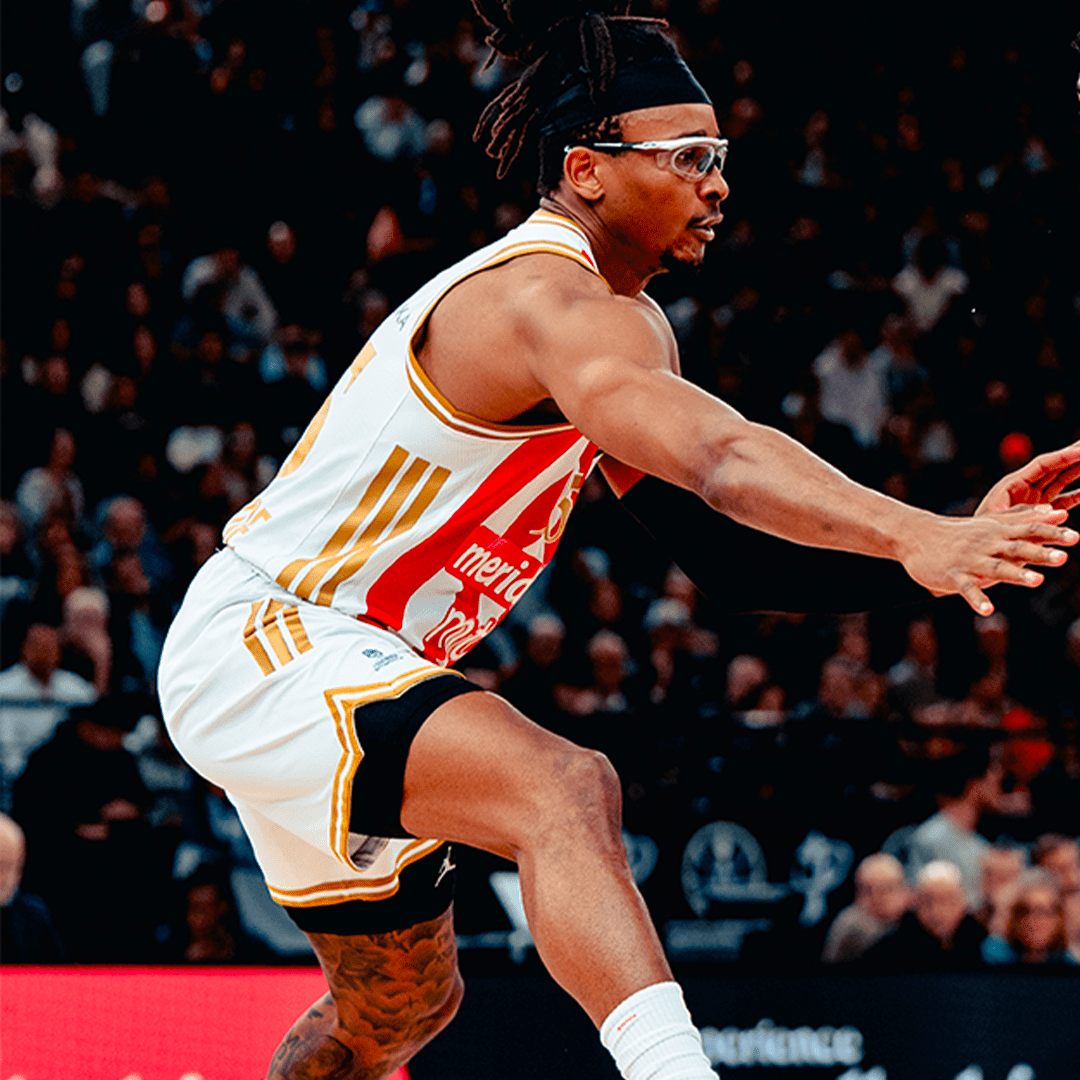
Player to watch : Chima Moneke
Although of Nigerian descent, the Abuja native traveled the world before settling in the Serbian capital. In Australia, Chima Moneke discovered basketball during his teenage years and then moved to another continent to continue his studies in the NCAA. There, the power forward averaged nearly a double-double for nearly two seasons. This globetrotter began his professional career with a road trip through France. From Rouen to Orléans, via Denain and Quimper, he performed well enough to even reach the NBA before playing for Monaco.
But it was during his two seasons with Baskonia (2023–2025) that Chima Moneke established himself as a powerhouse on the continent. At 27 years old when he arrived, his athletic strength combined with relentless aggressiveness off the ball. An expert at cutting through traffic to finish near the basket, he possesses rare mobility for his size, giving him elite defensive versatility… In short, the Nigerian consistently manages to make an impact, regardless of the opposing team’s game plan.
Playing style
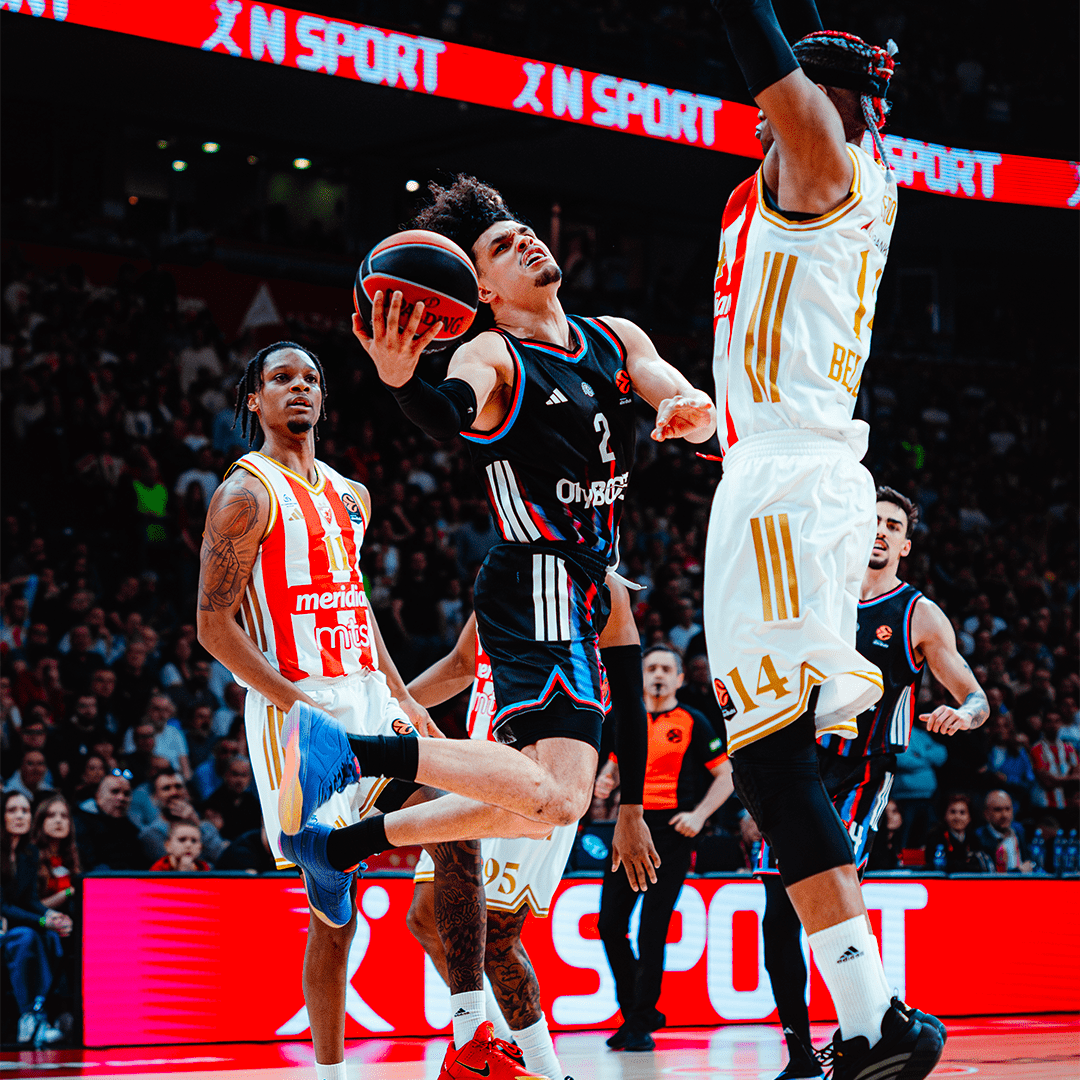
In the space of one off-season, Red Star Belgrade has gone from the ‘ice’ of Saša Obradović to the ‘fire’ of Ibon Navarro. A leading figure among this new generation of Spanish coaches, the former Málaga head coach has enjoyed three spectacular seasons, crowned with three titles. Advocates of an up-tempo style, the Serbian capital’s club strings together lightning-fast attacks with the aim of maximising possessions.
The big men often position themselves very high up the court to set screens, thereby allowing the guards to maintain their pace. This heightened intensity is mirrored at the other end of the court through constant off-the-ball movement aimed at cutting off passing lanes or seeking interceptions. There are many similarities between Paris Basketball’s style and that of Red Star Belgrade.
Club History
Two months before the end of World War II in Europe, Red Star was founded in Belgrade. And just one year after its creation, the club won the championship. This marked the beginning of a streak of 10 consecutive national titles for the men of Proleter Priština. All of this was accompanied by victories such as a 118-4 win over Kosmaj and a 110-15 victory against Proleter Priština. Moreover—beyond these results—this team played an attractive style of basketball, largely due to its participation in numerous international friendly tournaments.
Their RISE to the top of Serbian basketball was as meteoric as their FALL. This golden generation was, after all, not immortal. Once it ended, a transition phase inevitably followed—one that, in this case, would drag on in the capital. We’re talking about 14 long years of waiting. A veritable ordeal marked by a struggle for survival in the first division from the early 1960s onward. This dry spell came to an end during the 1968–69 season when Red Star defeated Jugoplastika, Zadar, and Partizan to claim another championship. In the wake of that success, Belgrade finished its first appearance in the European Champions Cup (C1) with a strong 4th-place finish. The team went on to win two national cups and one KLS title by 1973. This was followed by another dry spell lasting more than 20 years.
That, of course, was in Serbia. In Europe, however, the situation was quite different. First, Red Star confirmed its strong European debut with a superb bronze medal in the 1973 European Champions Cup (C1). But it was in the European Cup Winners’ Cup (C2) that the club achieved its greatest successes. Between the heartbreaking finals of 1972 and 1975, Belgrade lifted its first—and so far only—continental cup against Zbrojevka (86-75). The epic runs in the Korac Cup (C3) capped off this golden era in Europe. From 1881 to 1886, the Serbent reached the competition’s semifinals five times, culminating in an unfortunate final against Élan Béarnais in 1884 (97-73). At the same time, the Red and Whites alternated between contending for the podium and fighting to stay in the league domestically.
It wasn’t until the First Yugoslav War that Red Star returned to the top of the KLS standings. Following their loss to Partizan in the 1992 final, the capital club outclassed its historic rival twice in a row to claim back-to-back titles—the first such feat in over 25 years. Vladislav Lučić’s squad also claimed the club’s only national Super Cup. Two trophy-filled seasons were followed by four years filled with… doubts! Belgrade even narrowly avoided relegation. But to everyone’s surprise, the Serbs had a magnificent 1998. Despite four different coaches, the Red and Whites reached the Korac Cup (C3) final, which they once again lost to Scaligera Verona (68-74/73-64). Then the latter won the championship after changing head coaches during the finals.
Recurring injuries and a financial crisis marked the first decade of the new millennium. Aside from two cup titles, the club won nothing—except for the fact that it didn’t disappear from the European basketball scene. Those years of absence, however, gave way to a flurry of trophies. Under Dejan Radonjić, Red Star achieved two three-peats: one in the KLS and the other in the Adriatic League. This was complemented by a EuroCup semifinal and a EuroLeague Final Four appearance. This golden era continues today, as evidenced by the team winning six of the last eight championships. Today, the club is a dominant force in European basketball.
awards and honors
| Cup Winners’ Cup (C2) | 1974 | |
| Serbian Champion | 1946 / 1947 / 1948 / 1949 / 1950 / 1951 / 1952 / 1953 / 1954 / 1955 / 1969 / 1972 / 1993 / 1994 / 1998 / 2015 / 2016 / 2017 / 2018 / 2019 / 2021 / 2022 / 2023 / 2024 | |
| Serbian Cup | 1971 / 1973 / 1975 / 2004 / 2006 / 2013 / 2014 / 2015 / 2017 / 2021 / 2022 / 2023 / 2024 / 2025 / 2026 | |
| Serbian Supercup | 1995 / 2021 / 2022 / 2023 | |
| Adriatic League | 2015 / 2016 / 2017 / 2019 / 2021 / 2022 / 2024 |
Zoom : Mali Kalemegdan
Kalemegdan is a former fortress in Belgrade that was converted into a sports park in the 1920s and 1930s. At the time, it was used primarily by local soccer and track and field clubs.
In search of a modest venue for its early days, Red Star Belgrade set its sights on Mali Kalemegdan. It was on this outdoor playground, in particular, that the club would win its first 10 national titles.
Soon, however, Red Star opted for other arenas, such as Marakana. And when, in 1965, the Yugoslav Basketball Federation decided to hold the championship in indoor arenas starting with the 1967–1968 season, the club was forced to leave this iconic court for good. In November 1967, the last official game was held at Mali Kalemegdan, against Rabotnicki from Skopje. A different era…
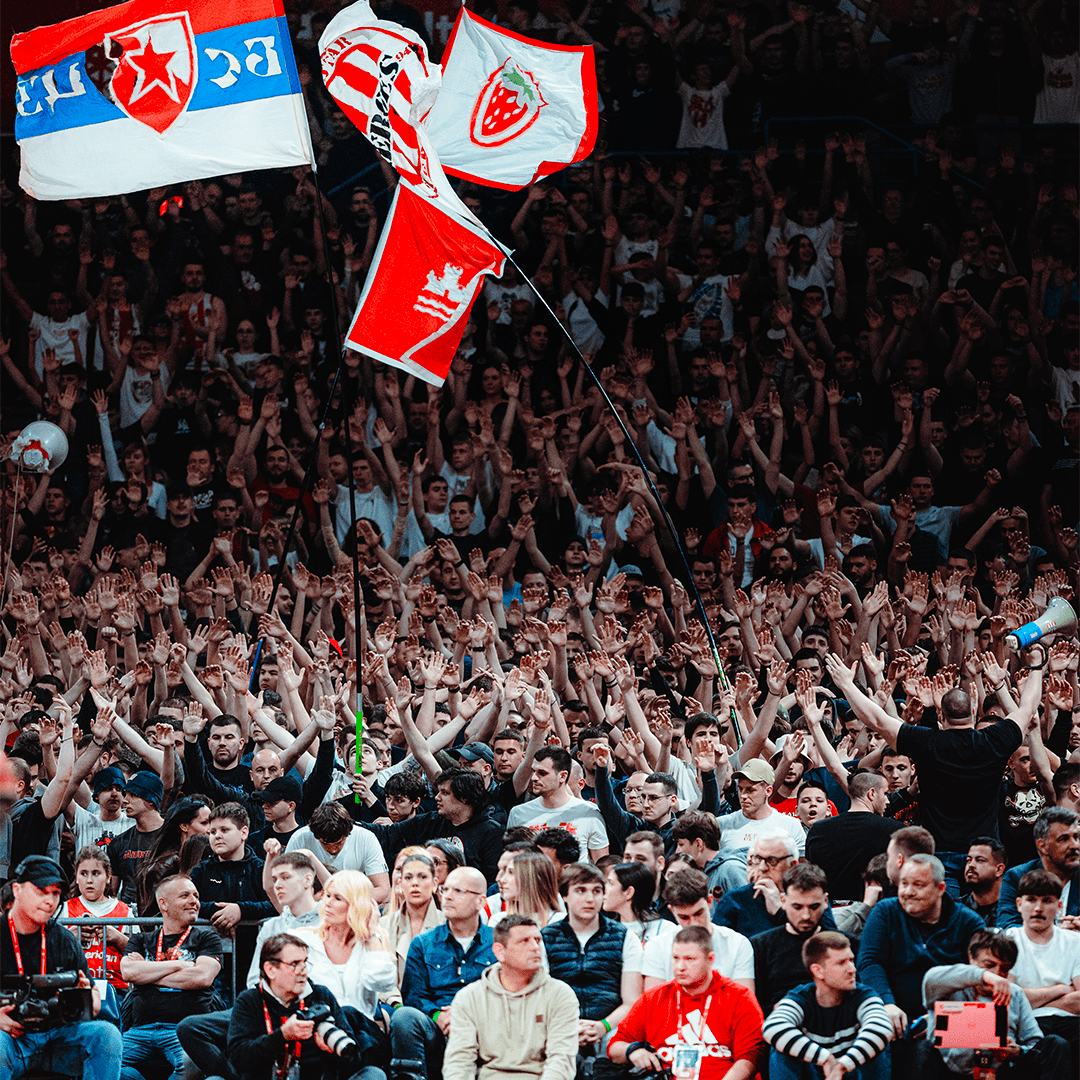
The Number : 24 232
That was the number of spectators in attendance on March 26, 2014, during the EuroCup quarterfinal against Ukrainian champions Budivelnyk Kyiv (79-70)—a record attendance for a European competition.
Other Teams