Hapoel Tel Aviv
Hapoël Tel-Aviv
| Foundation | 1923 | |
| Arena | Tel Aviv Arena | |
| Championships | Winner League / EuroLeague | |
| Coach | Dimítris Itoúdis | |
| Famous players who have played for the club | Patrick Beverley / Nate Robinson / Ish Wainright |
Player to watch : Zach LeDay
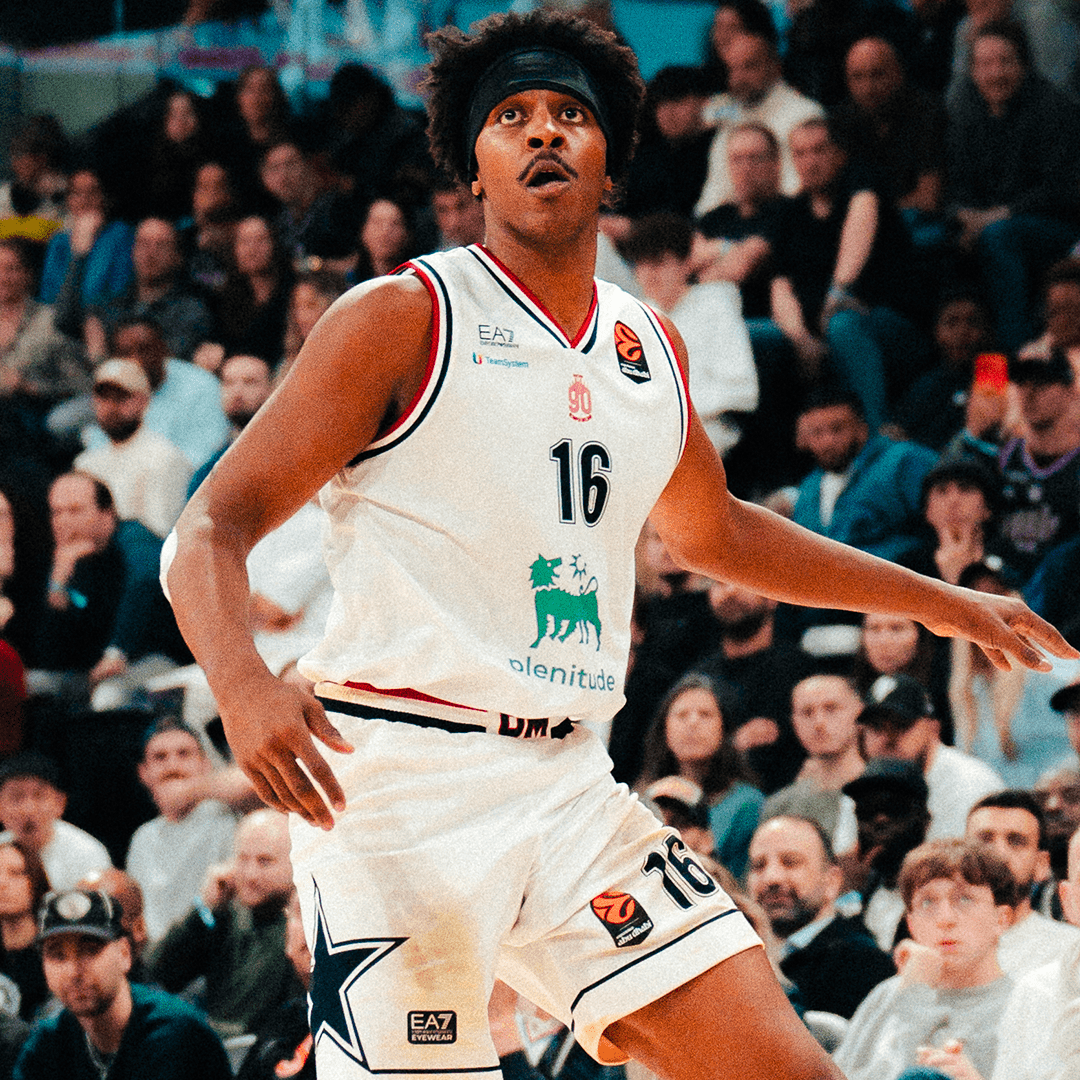
Zach LeDay is becoming an increasingly familiar figure on the European basketball scene. In eight EuroLeague (C1) seasons, the Texan has already racked up over 2,500 points across four of the competition’s top sides. It has been an unpredictable journey for the Azerbaijani international. Standing at 2.02 metres tall, the small forward/power forward took some time to make his mark in the NCAA. After initially struggling with the South Florida Bulls, it wasn’t until he joined the Virginia Tech Hokies that he really set the scoring charts alight. Too short for the draft, he chose to join Gilboa Galil straight out of university.
It soon became clear that the Israeli league was too small for him. Beyond his average of nearly 20 points, he was a player capable of racking up double-doubles averaging over 20 points and 20 rebounds. During the summer of 2018, he even took part in the Summer League playing for the Hawks, before ultimately making a leap up the European rankings by joining Olympiacos. A year later, he set his sights on Kaunas. He then headed to Olimpia Milan for his first spell, where he finished third in the EuroLeague (C1). This versatile player, possessing the aggressiveness of a centre on the boards and the finesse of a forward in shooting, honed his skills over three seasons at Partizan.
Back in northern Italy since 2024, Zach LeDay has established himself as the leader of a team undergoing a rebuild. A different role awaits him in Tel Aviv, though with even better chances of lifting the trophy!
Playing style
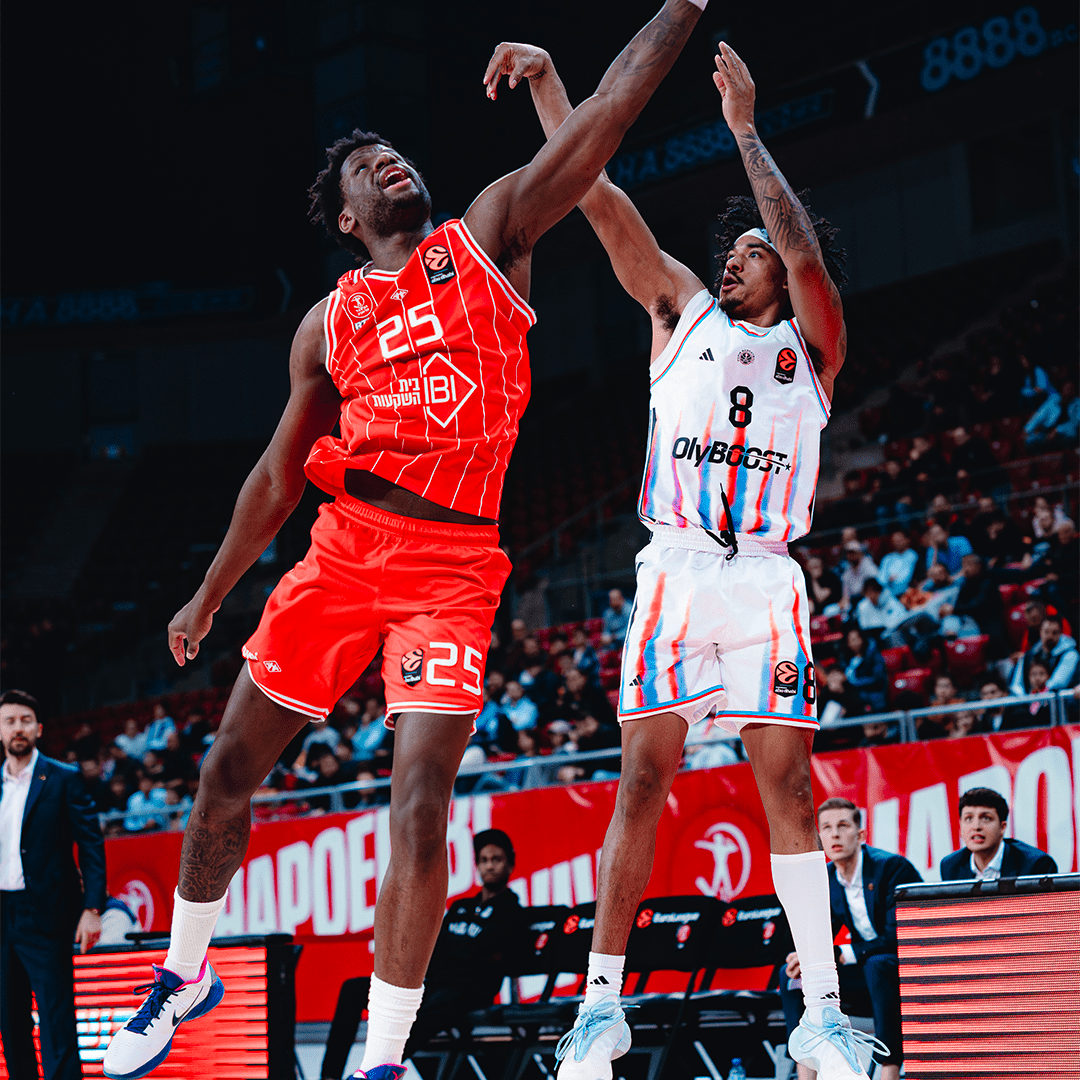
Much like Vasilije Micić, Hapoel Tel Aviv is a highly methodical team. The combination with Dimitris Itoudis’s structured style suits the squad perfectly. An ‘old-school’ style of play based primarily on half-court basketball featuring the pick-and-roll. Isolation plays are actually quite rare, as the ball-handlers prioritise passing or helping out rather than individual heroics. Never static, the ball moves around to find the shooter in the best positions.
Hapoel Tel Aviv, however, knows how to capitalise on turnovers. Running hard and bringing intensity is something that doesn’t faze the men of the two-time EuroLeague (C1) winners in the slightest. Their man-to-man marking is perfectly complemented by good switching. Even if, unlike teams such as Baskonia or Paris Basketball, defensive aggression isn’t ever-present. Through this system, the Israelis seek to protect areas susceptible to being exploited, for example. Hence the fact that they draw very few fouls.
Club history
Founded in 1923 by the socialist trade union Histadrut, Hapoel Tel Aviv initially established itself as a multi-sport club offering football, gymnastics and athletics. Basketball arrived in 1935 as a new section, with its first match against Hapoel Ramat Gan ending in a score of… 6-2! The national championship was established in 1954, six years before the club’s golden age. This golden decade began with two back-to-back titles (1960/1961 and 1965/1966) before culminating in a historic cup-and-league double in 1969. A tremendous achievement that only Maccabi would go on to replicate in Israel. Speaking of their neighbours, the sixties also laid the foundations for the rivalry between the capital’s two clubs. The icing on the cake: Barry Leibowitz’s men also got a taste of European nights.
It is hard to imagine, then, that this cascade of trophies of all kinds would suddenly turn into a barren wasteland. Yet that is precisely what came to pass. For that Ligat Winner title won in 1969 also marks the last in Hapoel’s history, with the club’s record in the competition standing at 5 wins and 22 lost finals! The curse began with defeats in both the league and the national cup against Maccabi. Even when their Tel Aviv nemesis was miraculously knocked out of a competition, the Red and Whites failed to seize the opportunity. And this went on for nearly 15 years! This bleak run, however, came to an end when it was surely least expected. Although 1980 brought a host of major changes, including the opening of the Hapoel Arena and qualification for the semi-finals of the Korač Cup (C3), the Israelis collapsed three seasons later, finishing seventh in the league. This was their worst performance since the league’s inception. The response was swift! The club signed Mike Largie and Willie Sims, promoted centre Amos Frishman from the youth academy, and went on to beat Maccabi for the first time in five years in the 1984 State Cup final.
A magical interlude amidst the lull that followed the Barry Leibowitz era. Apart from reaching the semi-finals of the 1988 Korac Cup (C3) once again, Hapoel won nothing for nine long years. The spark came this time during the 1992–93 season. Boasting an experienced squad, the Tel Aviv side finished the regular season at the top of the table – a first since 1969 – but, more importantly, lifted the National Cup. It was a competition in which they excelled, as the following year they reached the final once again. Subsequently, the club came under private ownership. Except that nothing went to plan! Due to multiple financial problems combined with poor management, the team suffered two relegations between 1995 and 2002. The standards of yesteryear returned in 2004 when the Red and Whites reached their first EuroLeague (C1) Final Four, capped by a fine third-place finish. However, behind the scenes, problems were mounting. Nothing to do with finances, but more with relationships. The supporters no longer backed the management due to certain decisions, such as the decision to play their home games at Maccabi’s ground. The toxic atmosphere spilled over into the sporting arena. At the end of the 2006–2007 season, the club were relegated and came close to disappearing.
And so, that same summer, a group of enthusiasts decided to set up Hapoel Ussishkin, a team run entirely by the fans. The venture took off, promotions followed one after another, and then, at the end of 2009, came the holy grail: Hapoel Ussishkin was granted the right to use the name ‘Hapoel Tel Aviv’ and to reclaim the titles of the disbanded team. The 70-year-old club rose from the ashes! Spurred on by young players led by their captain Matan Naor, the Israelis made their grand return to the top flight in 2012. Now, the capital’s club is consistently among the frontrunners on the national stage. At the heart of their new arena, named Shlomo Team Hal, they have reached the championship’s Final Four. And whilst Hapoel fought to avoid relegation during the 2020–2021 season, this was seen as a mere blip. All the more so as, in 2023, businessmen Ofer Yanai and Avi Seidenberg took the helm, bringing with them a substantial budget. The culmination of this revival came in 2025, the year in which the Tel Aviv side won the EuroCup (C2) against Gran Canaria (74-65/103-94). More than ever, the HaAdumim finally seemed capable of winning the Ligat Winner, which had eluded them for far too many seasons… or even the EuroLeague !
awards and honors
| EuroCup (C2) | 2025 | |
| Israeli Champion | 1960 / 1961 / 1965 / 1966 / 1969 | |
| Israeli Cup | 1962 / 1969 / 1984 / 1993 | |
| Israeli Supercup | 2022 |
Zoom : Logo
When it comes to logos with significant meaning, Hapoel Tel Aviv certainly has a lot to say. Firstly, regarding the design, we can see an athlete punching an opponent, a sickle and a hammer. These last two elements are symbols of communism. In fact, this crest immediately tells us that the club has its roots in a workers’ union of the working class.
But it doesn’t stop there, as the chosen colours reinforce this idea. Red and white represent the labour movement, whilst also expressing the notion that all human beings are equal, that the same blood flows through their veins. A powerful political message carried by the players at every match for nearly 90 years.
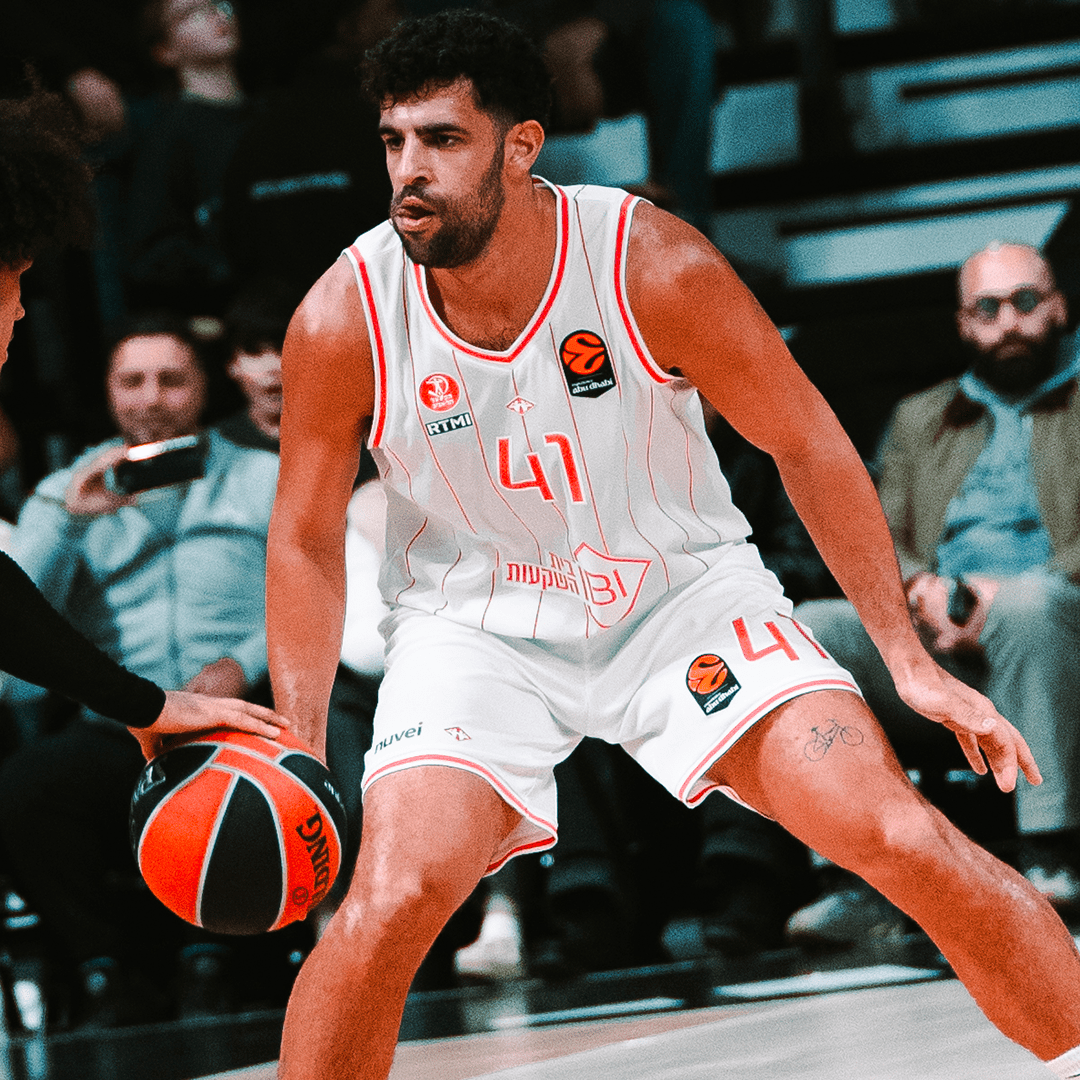
The Number : 131
This is the total number of points scored by half-time in the match between Hapoel Tel Aviv (64) and Baskonia (67) on 27 March 2026 – a EuroLeague record.
Other Teams